
Philippines IELTS prep
IELTS Exam Prep for Filipino Students
Choose the right IELTS route for study, work, migration, healthcare licensing, caregiver roles, and other professional goals through a flexible online plan built around real schedules.
 Free class entrySelf-paced path
What to decide first
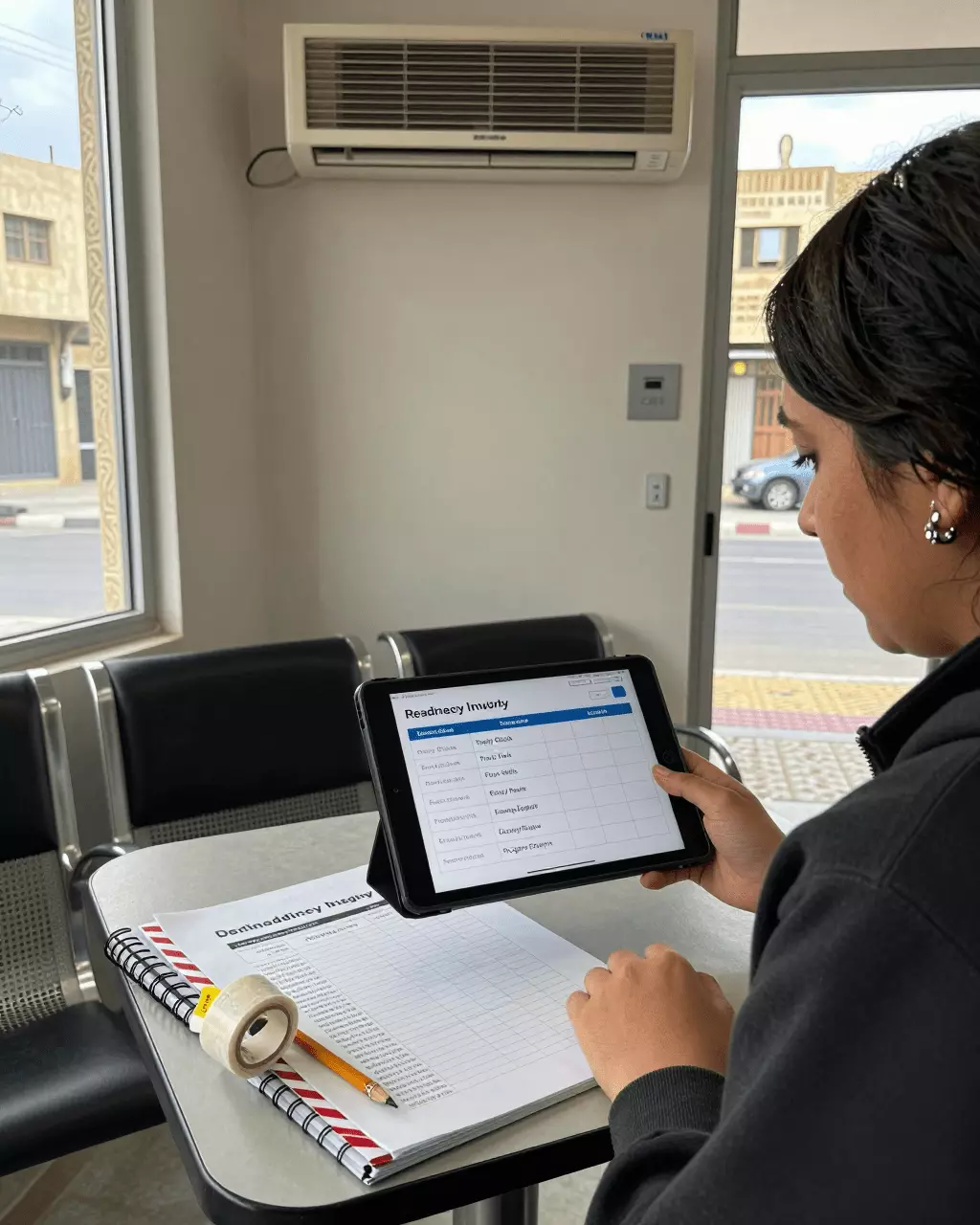
Before choosing lessons, confirm the goal, the test version, and how much weekly study time is realistic.
Start by verifying the official requirement
For learners in the Philippines, the first move is not buying the longest course or collecting random PDF tips.
Start by naming the destination: a university program, a registration process, healthcare employment, caregiver work, or a migration pathway. Each route changes the IELTS decision because the accepted module and score rule may differ. Always verify the exact requirement from the official university or employer first; for regulated routes, check the licensing body or immigration source before finalizing your test strategy. Some destinations care about the overall band. Others set section minima and accepted test versions, then add validity windows or retake timing, so a plan based on a friend’s route can send you in the wrong direction.
A Filipino learner preparing for study abroad may need Academic IELTS, while a nurse or caregiver preparing for work abroad may be told to use another route.
The IELTS tasks are the same on test day, but the preparation decision is not the same. Use the IELTS exam prep homepage as the broad starting point if you still need a high-level course map. Then return here to shape the Philippines-specific study sequence around your schedule and destination.

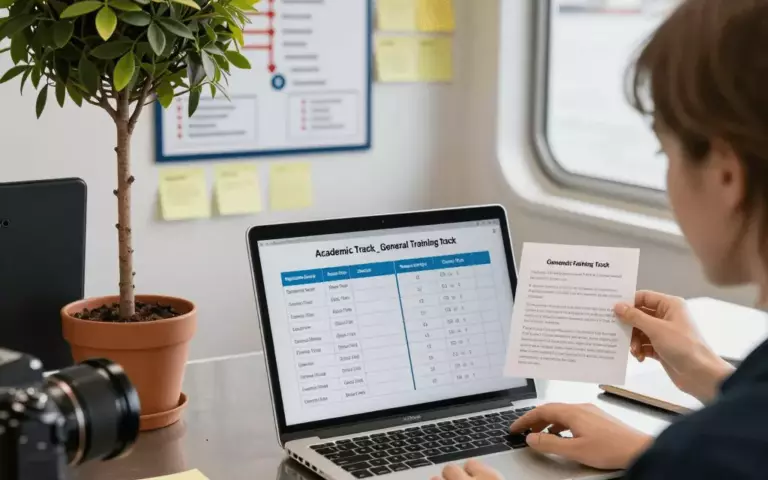
Academic or General Training
IELTS Academic fits many university and postgraduate pathways because formal reading and report-style writing become part of the score decision. The IELTS Academic preparation course is the natural next page when your institution confirms Academic.
General Training usually belongs to work or migration routes where IELTS is being used as general language proof. If that is your confirmed route, compare the IELTS General Training course before choosing your full sequence.
Choose by destination
Use this as a planning aid only; official requirements override general patterns.
| Goal | Likely route | Prep priority |
|---|---|---|
| University or postgraduate study | Academic | Academic reading plus Writing Task 1 and Task 2 |
| Work or migration pathway | General Training | Letter writing, essay control, and practical reading |
| Healthcare or licensing path | Official body decides | Score minima and section bands |
| Mixed or uncertain goal | Verify first | Start with free classes and baseline checks |
Where free classes fit
For Filipino students and professionals, free IELTS classes are a useful first step when either the schedule or the module choice is still uncertain. They should show the format, give you a small baseline, and let you check whether the learning style fits your week.
A useful free entry is more than one motivational video. Look for an IELTS format overview, baseline activities, a short writing task, and a clear path into the next level.
After the free sequence, use the baseline and module decision to choose the IELTS online course, a test-version course, or focused writing support.
Good free classes show three things
Use the free stage to make a clearer paid-course decision.
Current baseline
You see which sections need attention before paying.
Weekly capacity
You test whether lessons fit your real schedule.
Next path
You know whether to choose full prep, Academic, General, or writing.
Why online-first fits many Filipino learners
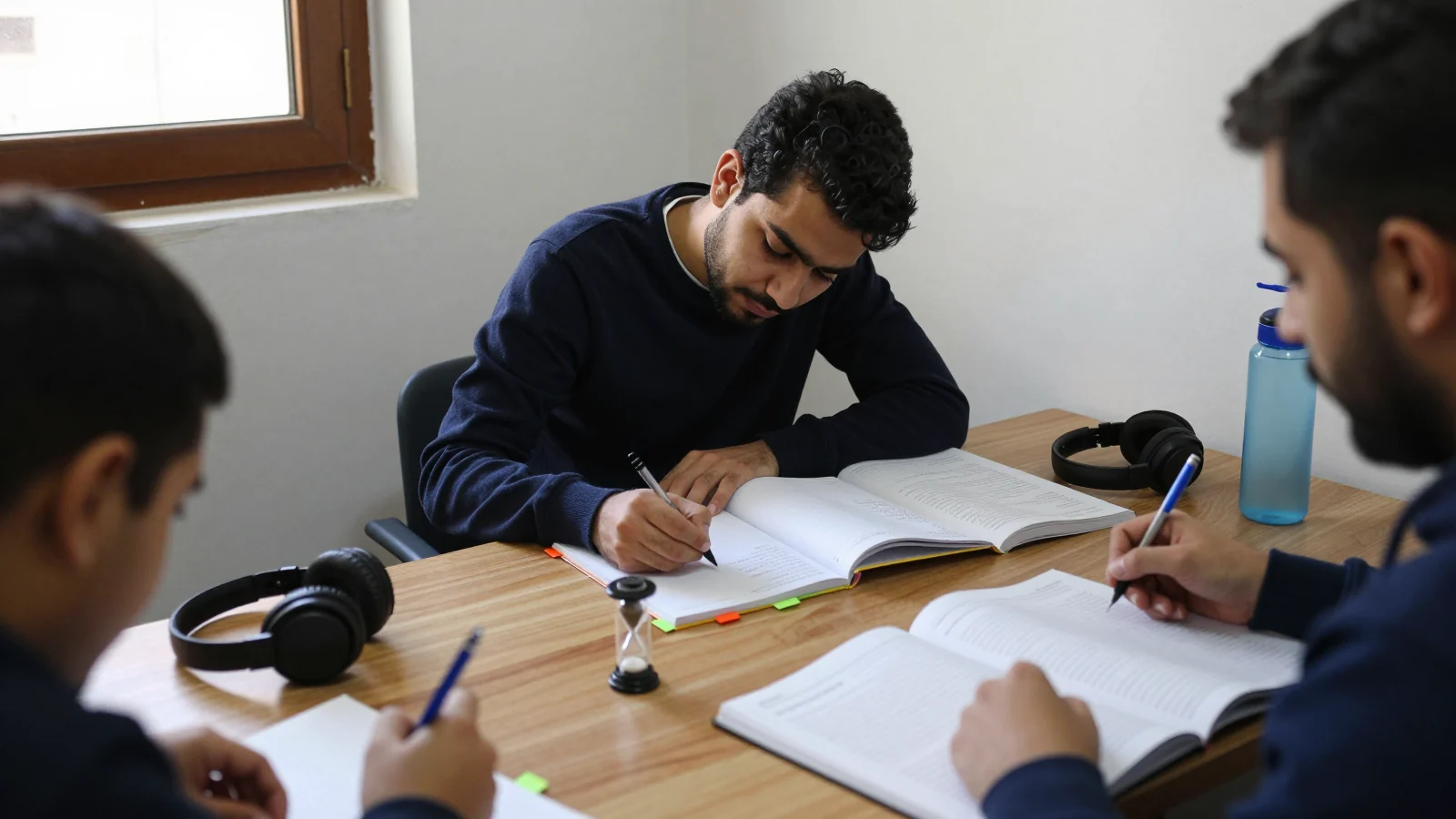
An online-first model works because many learners balance class schedules, clinical duties, commuting, night shifts, caregiving responsibilities, and family time. When the week changes, a fixed classroom schedule can become one more barrier.
Self-paced IELTS prep lets you study in shorter blocks and repeat lessons without losing the larger sequence. You can keep progress moving from home or between commitments. That does not remove discipline; it makes the routine more realistic.
Before choosing a paid tier
Answer these questions before moving from free access to a full course.
Is the target date fixed?
A close deadline needs tighter sequencing.
Are study hours stable?
Irregular weeks need modular lessons.
Is writing the main blocker?
Writing needs early review, not late rescue.
Do you need retake room?
One-year access supports repeat cycles.
What a full online sequence should include
A robust online IELTS sequence should begin with onboarding and baseline tasks.
In the first one or two weeks, the course should show where your study time is going, which errors repeat, and which section habits are already stable. The next phase should build skill blocks for Reading, Listening, Writing, and the Speaking section. Reading needs question navigation and timing. Listening needs instruction parsing and detail tracking. Writing needs task logic, paragraph control, register choices, and revision habits. Speaking needs organized answers with controlled tempo.
After the foundation, the course should move into error repair.
Recurring grammar problems and vocabulary gaps need to be named alongside timing pressure and instruction misreads before they can become a plan. If writing remains the largest bottleneck, move into the IELTS writing course for deeper section-specific practice. The final phase should use timed practice and section simulations with recovery routines. Scores become useful only when they point to a concrete adjustment before the next timed attempt.
A practical prep sequence
Use this order when you need structure but cannot study full time.
Confirm the route
Verify Academic, General Training, score bands, and timing.
Run the baseline
Complete starter tasks and one short writing sample.
Build section blocks
Rotate Reading, Listening, Writing, and Speaking practice.
Repair repeat errors
Track patterns and revise only the highest-value weaknesses.
Simulate test pressure
Use timed practice after your method has stabilized.
Adjust the cycle
Review results and repeat the weakest section loop.
Two study realities
Most learners need a plan that handles both focused and fragmented weeks.
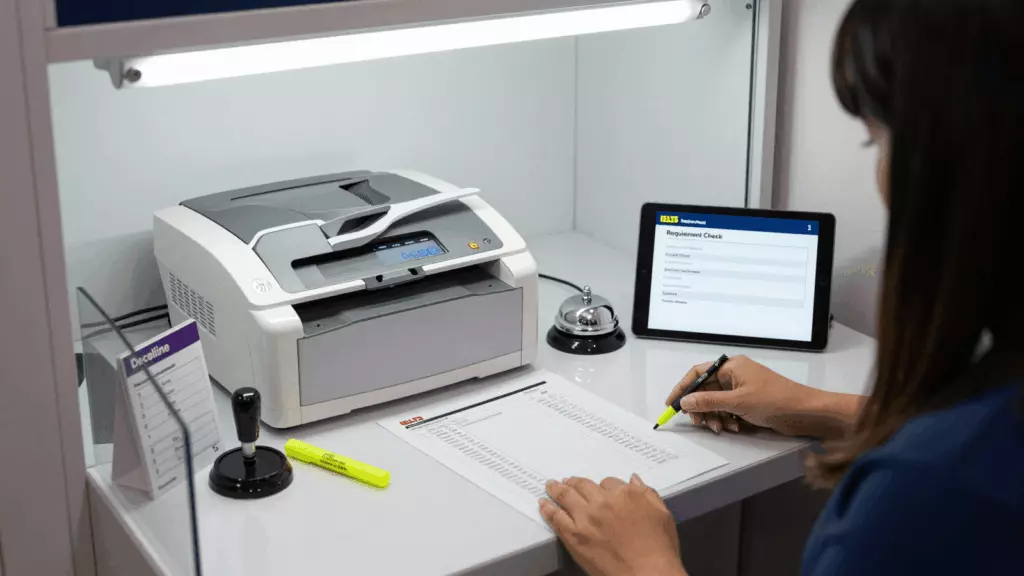
A planned desk block for writing and timed section work.

A lighter review block for busy days and rotating shifts.
Choose a schedule that survives real life
The right plan is the one you can repeat when the week gets busy.
3 to 5 hours
Use short blocks for one Reading or Listening task, one Writing session, Speaking planning, and error review.
6 to 8 hours
Add two main study windows, writing revision, section integration, and one correction block.
9 to 12 hours
Use acceleration only with timed practice, writing review, and at least one lighter recovery day.
Irregular weeks
Protect a minimum rhythm: one section review, one writing block, and one speaking-planning block.

Writing support should start early
Writing can stay unpredictable even when study hours increase, so a repeatable workflow matters. Plan the response, write one timed version, mark task alignment, identify recurring errors, rewrite the highest-value points, and repeat under tighter timing.
Do not wait until week eight to fix writing. Early writing review improves later practice-test feedback because you know what to look for when scores move.
What to track each week
A simple record keeps IELTS progress measurable.
Section timing
Track where time disappears.
Error patterns
Mark repeat mistake categories.
Writing revisions
Save rewrites to compare progress.
Two-week checkpoint
Review what improved and what remains.
Match the route to your profile
Different Filipino learners need different starting points.
University applicants
Confirm Academic needs and start writing early.
Healthcare workers
Use short lessons around demanding shifts.
Migration goals
Verify criteria and balance every section.
Score recovery
Reduce breadth and repair one weakness at a time.

Common mistakes to avoid
The biggest mistakes are choosing the wrong test version, treating free classes as the whole plan, studying all sections equally for too long, ignoring schedule variability, and changing method after every small score change.
A steadier rule works better: each week ends with one focused correction decision. That keeps progress tied to evidence, not anxiety.
A realistic timeline for Filipino learners
A four-to-six-week timeline is only sensible when your target, module, and baseline are already clear. Use the first two weeks for confirmation and writing start, then move quickly into section repair and simulation.
An eight-to-twelve-week timeline is more practical for working adults and students.
Week one handles onboarding and baseline. From there, build the section foundations before shifting into correction and writing support; later weeks should move into test simulations and stability checks across the remaining window. A twelve-week-plus timeline fits learners who need major schedule resets or repeated cycles, and the extra time is best used for a second precision round instead of stretched random practice.
Longer access only helps when it supports cycles. A one-year course window can give room for retakes and work interruptions, but it still needs weekly checkpoints so second attempts are planned instead of improvised.

Keep momentum with small reviews
Sustainability is not about perfect willpower. Use a daily quick log, a weekly top-two error list, and a two-week checkpoint for what improved and what remains.
For Filipino learners with family or work responsibilities, this rhythm is often more realistic than copying a rigid two-hour daily plan.
Questions Filipino learners ask
Use these answers to choose the next page in your prep path.
Most education pathways expect Academic, but your university or program decides the rule. Verify the official requirement, then compare the Academic preparation course.
If your schedule or current level is uncertain, free classes are still useful. They help you confirm the format and baseline before choosing paid access.
Yes, if the plan is modular. Short section blocks, weekly minimums, and repeated error review work better than a rigid daily schedule.
Paid access becomes useful when you need structured sequencing, writing support, checkpoints, and enough time for repeat study cycles.
Use practice tests in planned cycles. A two-week review loop is usually better than collecting weekly scores without changing the study method.
Start with task structure and revision routines. Then use the IELTS writing course when you need concentrated section-specific improvement.
Useful next reads
Continue with the route that matches your immediate decision.


Start with the lowest-friction step
If the module is still unclear, begin with free classes. If the route is confirmed, move into the self-paced online course.
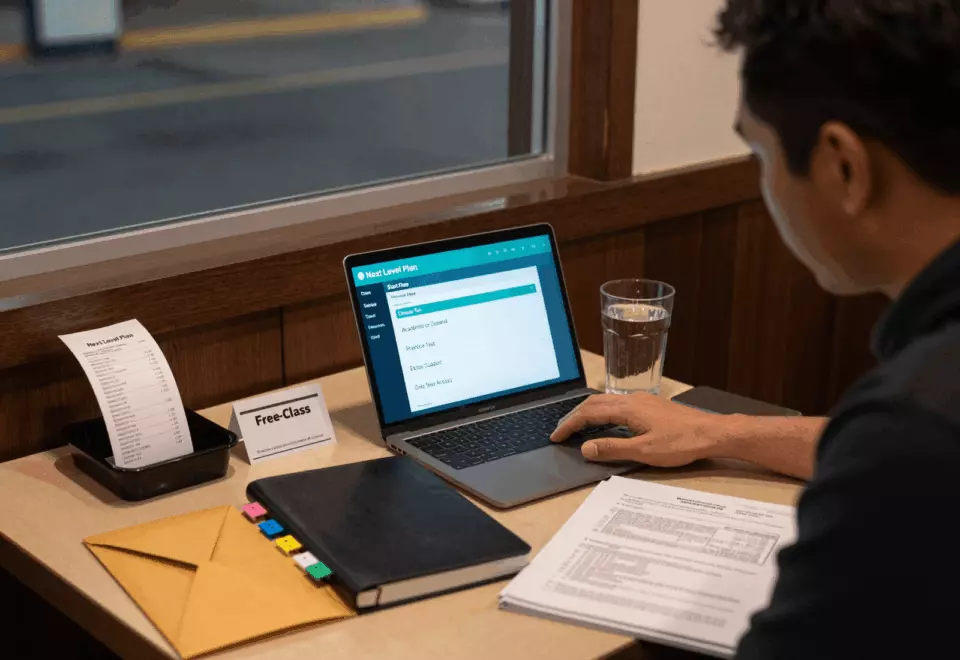

Need the full sequence?
Use the complete IELTS online course when you know the goal and need structured section practice, writing support, and repeatable checkpoints.
Related IELTS resources
Use these links for the next preparation steps referenced in this guide.
Homepage
Continue with this related IELTS preparation step.
Open resourceFree IELTS classes
Continue with this related IELTS preparation step.
Open resourceIELTS online course
Continue with this related IELTS preparation step.
Open resourceIELTS Academic preparation course
Continue with this related IELTS preparation step.
Open resourceIELTS General Training course
Continue with this related IELTS preparation step.
Open resourceIELTS practice tests
Continue with this related IELTS preparation step.
Open resource