IELTS exam prep
Free IELTS Classes Online: Try IELTS Lessons Before You…
Try structured free IELTS classes online, then upgrade to a full IELTS course only when you are ready for more guided practice, assessments, and support.

Action list
Use this before the next step
A short checklist keeps the page practical instead of theoretical.
Know your goal
Define the score and route before study volume.
Use the right page
Move to the linked core page that matches the need.
Measure progress
Retest only after focused revision.
Avoid guarantees
Treat improvement as a system, not a promise.
Why free IELTS classes matter before buying anything
If you are seeing “free IELTS classes” in search, you are likely in one of three situations: you are still uncertain whether this platform can match your learning style, you have a tight budget and need to test value, or you want to refresh your basics before committing to a full plan. That uncertainty is normal, especially for an exam as high-stakes as IELTS.
The problem is not usually motivation. Most learners are willing to study. The bigger problem is poor visibility: they do not know what a realistic preparation journey looks like and they do not know what paid access changes in practical terms. A good free IELTS classes page solves that uncertainty by showing structure and standards before money enters the conversation.
When users ask for a free IELTS course, they are not always looking for a giant library. They are often searching for evidence of teaching quality. A sample lesson can answer this much faster than a feature list. That is the role of a free sample class strategy: not to replace a full course, but to prove the method. You are not committing to a syllabus; you are validating the teaching logic, lesson format, and progression quality.
The SEO goal for this page is to capture those users who want to “taste” quality before paying. The keyword logic is straightforward:
They use transactional words like “free.” – They use intent words like “classes,” “course,” “sample class,” and “video lessons.” – They are comparing alternatives and asking if this course framework can actually help with their score target.
For this page, we should therefore answer practical questions clearly and avoid hype. We should state what users can do in the free stage, what remains for paid access, and what a good next step looks like based on their level.
Study workflow
A course dashboard should clarify the next lesson
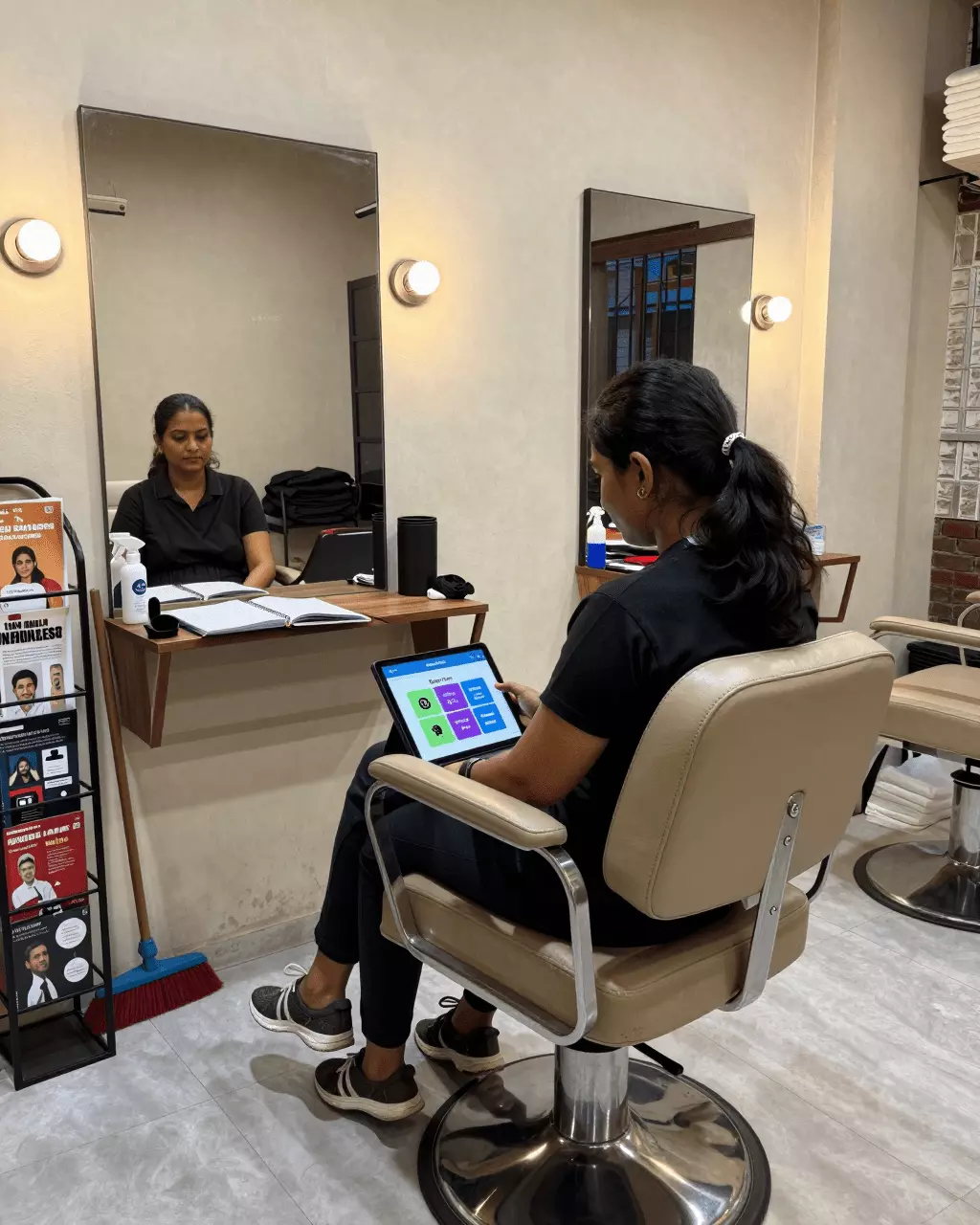
Use this visual to show a real self-paced course environment: progress, current module, and the next action without readable interface text.

What "free IELTS classes" can realistically include
“Free” can mean different things online. Some pages call any downloadable note free. Others call sign-up content free. A few call a very short trial class free but hide structure. The best practice is transparency. If your free IELTS classes are structured and useful, define them explicitly.
For this page, a reliable free-tier package can include:
A short orientation guide explaining the test format and score components. – A clear roadmap for how the next 2 to 6 weeks should be planned. – Several free IELTS video lessons that demonstrate one core concept per session. – Simple practice prompts with answer-check approaches. – A real sample class showing your lesson delivery style. – A way for learners to identify where they should start based on current level. – A low-friction way to save progress and continue later.
That is enough to solve the early-stage decision problem for most learners.
We should be careful not to present the free set as a complete replacement for paid learning. It is a gateway.
What beginners can expect from the free package
Beginners often need fewer concepts and more orientation. For them, a free IELTS course should answer:
What exam sections to prepare first. – How to use 30 to 60 minutes a day effectively. – Whether the course language is understandable at their level. – Whether they can build confidence with listening, reading, and writing basics.
A good free IELTS sample class for beginners might cover test format, time management basics, and one repeatable method for one question type. If a learner can understand the teacher’s instructions, complete the activity, and see how to self-evaluate, they already gained meaningful value.
What stronger learners expect from free classes
If you have done some IELTS prep already, your “free” expectations are different. You usually look for:
Clear quality gaps in your current strategy. – A stronger explanation layer you can apply immediately. – Honest difficulty calibration: easy topics versus deeper analysis. – A path that does not force you into beginner content for weeks.
In that case, free IELTS training online should include focused, non-redundant content: one high-signal lecture, one diagnostic framework, and one realistic mini-practice task. A free lesson that repeats basic textbook points without depth will not convert long-term.
Most free funnels fail at conversion because of mismatch. Learners click because they need practical support, but they end up seeing:
Promotional copy instead of teaching value. – Too few lessons to judge quality. – A broken link between free content and paid curriculum. – Tools promised in free content but never actually accessible.
This page must not do any of that. A user should immediately understand:
What is included. 2. Why this is useful right now. 3. What comes next if they continue.
When those three are explicit, free classes attract better-fit users and reduce frustration.
A practical framework: free lesson sequence by level
One source of confusion for learners is “Which lesson should I start with?” People often waste days by opening random lessons by topic without building a foundation. A level-based path removes this guesswork and keeps users in flow.
This path is for learners who know what IELTS is but are not comfortable with all sections yet.
Step 1: Orientation + test map Start with one orientation lesson that explains:
IELTS sections and timing – Score bands and how each section contributes – What to expect in a study plan and what not to overfocus on
This short module lowers anxiety and creates context for all later work.
Step 2: Vocabulary and comprehension baseline Use a free IELTS video lesson on reading/listening foundations:
Skimming vs. scanning – Time markers and note-taking structure – High-frequency academic and formal writing vocabulary
No heavy theory. The aim is immediate usability.
Step 3: Writing mechanics mini-block Introduce paragraph basics, sentence clarity, and planning logic. Not scoring promises-just habits:
one-step planning framework – one structure template they can reuse – one mini task with teacher-style feedback on what to improve
Then offer the entry route into the full IELTS writing course only if they want deeper task practice.
Step 4: Review and next recommendation Finish with a checklist:
If they can complete orientation and one writing task, move to structured paid access. – If they feel behind, stay in free support with slower follow-up.
This path proves whether the learner can sustain momentum with simple, practical guidance.
This path is for learners who are already studying but need consistency and a better system.
Step 1: Weakness-first diagnosis Offer a short diagnostic lesson that compares current study habits with exam demands:
Which section has recurring errors – Whether they are mismanaging time – Whether they know task instructions deeply enough
No judgment language. Just data-like clarity.
Step 2: Focused improvement lesson Provide one lesson for one high-impact area, for example:
improving reading selection under time pressure – correcting grammar choices that silently hurt writing accuracy – building note-taking discipline for listening passages
This keeps engagement up because learners see immediate return from one lesson.
Step 3: Mini task cycle A short sample task can include:
instruction 2. timed practice 3. model answer breakdown 4. improvement checklist
This is exactly what a serious learner needs before deciding if a longer paid course is worth it.
Step 4: Upgrade decision If they complete this path confidently, redirect them to the IELTS online course where the full progression and module depth continue.
Some learners are already familiar with IELTS structure and are likely targeting specific improvements. They need less theory and more correction systems.
Step 1: Precision audit Use a free IELTS sample class format showing:
why common “good” habits plateau at intermediate score levels – where answer quality fails at higher bands – how to identify the gap between intention and execution
Step 2: One high-level teaching module Offer a video on the exact issue they came for, such as:
advanced sentence control – argument depth under time pressure – coherent sequencing of ideas
This shows whether the platform understands upper-band mechanics.
Step 3: Strategic continuation path At this point the learner is best served by:
the IELTS Band 7 course for score-focused milestones – the IELTS writing course for writing depth – optional readiness tools when available: IELTS practice tests and IELTS writing checker
The point is to move from free to structured improvement paths with full transparency.
What makes a free sample class convincing
Most pages say “watch this free class” but do not set expectations. A strong sample should make the learner think:
“I know what this course will and will not be.” – “This format is clear.” – “I could follow this without spending money yet.”
To achieve that, every free sample class should include five things:
Avoid “today we learn IELTS tips.” Say “Today you will learn how to answer one type of task under time pressure, and you will know exactly what to check afterward.” Learners should not leave wondering what outcome they achieved.
For reading/listening/writing, show sequence:
If there is no sequence, it does not feel like a lesson. If there is sequence, it feels like a system.
A practical example, not a lecture-only performance
Walk through one question type, one prompt, and one corrected attempt. This is where users judge method quality. They are not buying charisma. They are buying a repeatable process.
Did I follow the prompt accurately? – Is my answer complete? – Did I use clear structure? – Did I complete within time?
Prep sequence
How the course path should unfold
This sequence should feel like a learner moving through a product, not a generic study collage.
After the sample, users should understand the next step:
continue free to another lesson – start free trial pathway – begin full access if they want deeper progression.
This link between free and paid is exactly the free funnel intent.
What free IELTS classes do not include
A high-trust page also says what it does not include in its free section. Otherwise users feel baited.
guaranteed score increases – full replacement for the complete paid program – complete mock test ecosystem – speaking-only private coaching – unlimited one-on-one feedback from day one
Those do not align with the free-to-paid design and can erode trust. They may also create legal or expectation problems if we imply outcomes outside the product truth.
If you include practice test links, label readiness levels clearly. For example, if the full test layer is in build or rollout stage, say “coming soon” rather than presenting it as continuously available.
How to choose your free starting point based on goals
Most conversion losses happen because learners start at wrong intensity. A student may only need 5 days a week planning, while another may only study one hour. A good free page should support planning diversity.
Use this if you want to understand the format and avoid wasting money.
Orientation lesson – One language foundation lesson – One writing structure lesson – One self-check checklist
Ideal for those asking “What can I realistically improve in the next 2-4 weeks?”
Use this if your main problem is not knowledge but consistency.
One time-management lesson – One section target lesson (reading or listening) – One short writing response task – One action plan for next 7 days
Ideal for those who studied before but need a plan that sticks.
Use this if you already have base score and need a specific score move.
Diagnostic mini-lesson – One targeted improvement lesson – One sample with clear scoring criteria explanation – Referral into advanced page: IELTS Band 7 course
Ideal for those searching for a high-signal, less noisy approach.
The role of free IELTS classes in the whole study funnel
This page should not just be marketing copy. It should function as study triage. People click it for three reasons:
They want no-risk entry. 2) They want evidence of teaching quality. 3) They want to decide if a paid path is worth it.
You can use free classes to route each type.
If a learner is early in preparation and just needs confidence, they can start with low-cost consistency: watch, attempt, review, repeat. They gain familiarity with test logic and learn study tempo.
continue with free content if still assessing fit, – or move into full paid course when gaps become clearer.
Funnel route B: Move into full IELTS online course
When learners are satisfied with lesson clarity and delivery, the next best move is the structured IELTS online course. The free stage should make that move feel natural.
longer-term access to lessons – stronger sequencing across sections – repeat access and structured progression – clearer accountability.
Funnel route C: Jump to band-focused or writing-focused upgrade
If your learner response shows one section is consistently weak, route them directly to the right page:
writing difficulties: IELTS writing course – target-band planning: IELTS Band 7 course – readiness testing: IELTS practice tests – writing quality checks: IELTS writing checker
This keeps traffic relevant and avoids generic messaging that turns away serious users.
Common mistakes people make with free IELTS materials
Knowing the typical mistakes helps us design better free content.
Many learners watch one lesson and conclude the product is not for them. A free funnel should include a short chain of lessons that demonstrates depth over multiple sessions. You can define a “minimum value pack” and show it as such.
Shallow random browsing leads to frustration. Free classes must include sequencing guidance: where to start, what to do next, and what a learner should finish with.
Without checkpoints, there is no improvement signal. Even a short free section should include a reflection prompt such as:
Which question type is still unclear? – Where did I lose time? – Which mistakes repeated?
If learners answer those consistently, they can move to paid modules with clarity.
Not everyone converts immediately, and that is okay. But free-only learning only accelerates if intentionally expanded. A learner should use free classes as assessment, then move to a full route once their baseline and weakness map are clear.
Mistake 5: Assuming one weak section is the whole problem
If reading is weak but writing is strong, the strategy should not reset everything. The free path can split by section and show how to build a targeted plan without overhauling the whole study schedule.
Mistake 6: Comparing all free materials by hype
Different platforms use different promises. The one thing that predicts fit is lesson usability, not claims. A useful free IELTS class is one where the learner can apply one method immediately and check their progress.
Long videos are not proof of depth. Clarity, structure, and progression are. A focused 15-minute lesson can be stronger than a 2-hour generic recording if it has one clear outcome.
What to expect after the free phase
When the free stage is done, learners should have three visible signals that help them decide:
I know the lesson system now. 2. I can identify where I am weak. 3. I know what my next action should be.
Then they can move to a paid format that gives consistency and coverage.
The full course should meaningfully expand on free entry points:
complete lesson pathways by difficulty – guided section-by-section progress – assignments and repeated practice – stronger tracking and milestones – better alignment between reading, listening, writing tasks – support for long-term study rhythm and retention
This is where the value move happens. The free content shows promise; paid access gives repeatable execution.
How Courseflare-based learning supports free-to-paid flow
If your platform uses Courseflare, be explicit about access logic:
users can open full course modules from their account – progress is saved across sessions – learners can return after breaks without losing sequence – one-year access exists in relevant paid tiers
That makes the decision less abstract. You are not promising features; you are explaining how studying becomes continuous.
How to use free IELTS classes with a realistic weekly plan
For many learners, the biggest barrier is not lack of resources but poor schedule design. A simple free plan helps users test whether the course can be followed with their real life schedule.
Day 1: Watch one free video lesson (20-35 minutes), note your errors. – Day 2: Complete one short practice activity related to the lesson. – Day 3: Review mistakes and rewrite one answer using the same framework. – Day 4: Watch another free lesson (if available), focus on adjacent skill. – Day 5: One full mini-session combining what you learned. – Day 6: Reflect on what changed from Day 1. – Day 7: Decide whether to continue free or start full access.
This structure keeps the free stage useful rather than random.
Use one lesson per day with short intervals. The aim is consistency over volume, and free lessons should never require long uninterrupted blocks. The design of this page should reassure this audience that one hour can still be enough if used correctly.
Section-by-section preview: what a free IELTS classes library should prioritize
Even though this is a free entry point, it should still represent all exam realities without pretending depth in every area.
In the free portion, include one passage strategy, one question-type walkthrough, and one method for error control.
Avoid turning reading into passive passage solving. The page should teach method, then apply it to one example.
Offer one note-taking framework and one section-level speed control strategy. Listening is often where learners mismanage pace more than knowledge. A free lesson should fix that first, because it gives immediate gains and confidence.
Give one task-focused framework, one example response, and one “revision script.” This is exactly where many learners gain practical confidence quickly because writing quality improves with repeatable structure.
Keep this section realistic. A free course preview can explain how the Speaking section works and show learners how to think about fluency, clarity, and common prompt types. The free entry point stays lesson-based, with Speaking treated as part of exam awareness rather than a separate service.
At free stage, focus on correction habits and accuracy in high-frequency language. Keep the output practical:
phrase bank for common transitions – basic verb form control – common learner errors that lower clarity
The learner decision matrix: when to stay free and when to upgrade
you need to understand teaching style first – you are exploring options across different IELTS providers – you have only 1-2 hours this week and want clarity first – you want to test if methods match your learning tempo
your first free modules are clear and useful – you can identify weak sections but need sustained structure – you want repeatable progression across all sections – you need a long enough sequence for real progress
This is not a hard sell. It is a planning step.
Build your free IELTS journey as a real experiment
One of the most effective ways to protect user trust is to frame free engagement as an experiment, not a transaction. The page should invite users to test method quality and learning fit.
Hypothesis: “If I use one clear framework, my understanding improves.” – Method: complete one sample class + one mini task + one review. – Measure: can I execute faster and more clearly? – Decision: keep free, repeat, or upgrade.
This mindset prevents disappointment and reduces buyer’s remorse.
Why users choose "IELTS online course free" over random content
Free material across the internet is huge. So the question becomes: why pick your free classes and not someone else’s?
structure is explicit – outcomes are practical – progression is understandable – language is realistic for real students – upgrade path is clear and not manipulative – the brand does not claim unavailable features
That last point is often overlooked. Trust is now one of the strongest ranking signals in user behavior. If you communicate honestly about what is included now and what is coming later, the conversion quality improves over time.
Practical language for conversion without pressure
“Start with one free class and decide what to do next.” – “Use the free modules to test whether the method fits your routine.” – “When you are ready, continue in the full online program.” – “You can scale your prep when your baseline is clear.”
These phrases support autonomy and are easier to convert from a trust perspective.
Start With One Free Class
If you want to test whether this teaching style works for you, start with the free path first: orientation, one sample module, one practice task, then decide your next move.
Ready to begin? – Explore the free lesson path and sample content. – Move to the IELTS online course for structured progression. – If your primary need is score refinement, review the IELTS Band 7 course. – If writing is your priority, start with the IELTS writing course. – If you need ongoing readiness and quality checks, use IELTS practice tests and IELTS writing checker when you are ready for the next stage.
Questions
Common questions
These free IELTS classes are presented as open entry content. There should be no requirement to pay before you can access the sample lesson pathway. Any optional paid upgrade is separate and clearly labeled.
Expect one practical lesson with an objective, demonstrated method, and a short self-check. The aim is to show teaching style and whether the format fits your study needs before deciding on paid access.
No. Free lessons are meant to help you assess fit and start with direction. A full IELTS course provides a deeper progression, more structured practice, and sustained sequencing across sections.
The same page can serve both, but the starting path should differ. Beginners should use the orientation-heavy route first, while stronger learners should start with targeted or diagnostic free modules.
The difference is usually structure and consistency. A useful free IELTS course not only gives content but also guides what to do next and how to judge progress.
Upgrade if you need more depth, better sequencing, broader coverage, and continued access beyond a small free sample. The full IELTS online course is designed for that next step.
Next step
Start free, then choose the next level
Use the free classes or course level that matches the learner's current baseline, then continue with practice and writing support as needed.