IELTS exam prep
IELTS Reading Strategies: Timing, Skimming, Scanning, and…
Learn practical IELTS reading strategies for timing, skimming, scanning, question types, and accuracy. Build a full 60-minute reading system that improves score stability across Academic and General…

Workflow
Practice loop
Use a repeatable sequence so preparation turns into measurable progress.
1. Set baseline
Use one controlled attempt to find the real starting point.
2. Use timing
Keep conditions stable so results are comparable.
3. Log errors
Record repeat mistakes by root cause, not by emotion.
4. Retest later
Retest only after changing one clear variable.
Action list
Use this before the next step
A short checklist keeps the page practical instead of theoretical.
Know your goal
Define the score and route before study volume.
Use the right page
Move to the linked core page that matches the need.
Measure progress
Retest only after focused revision.
Avoid guarantees
Treat improvement as a system, not a promise.
Why IELTS reading feels harder than normal reading
Many learners say, “I can read long articles in English, but I fail IELTS reading.” That sounds contradictory until you separate two kinds of reading:
Natural reading: understanding ideas at your own pace for meaning. 2. Exam reading: extracting specific target information, under time pressure, for scoring decisions.
The IELTS reading test is designed around the second kind. You are not just reading for meaning; you are reading to:
Practice workflow
Practice only matters when it changes the next step
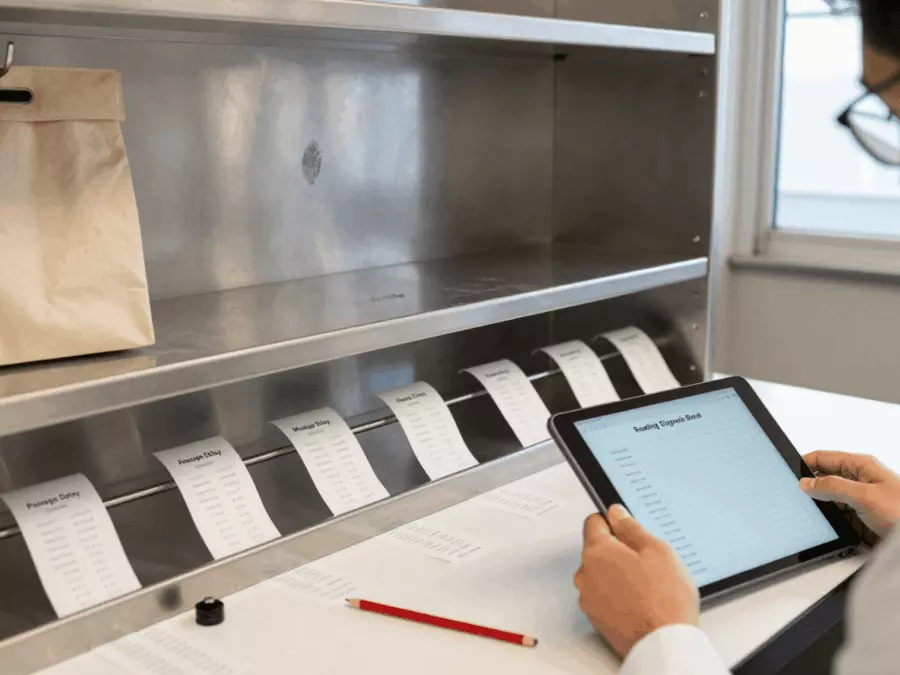
Show a timed test or practice dashboard that leads into diagnosis instead of presenting a score as the whole result.

identify question demands correctly, – locate evidence fast, – choose or produce one exact option, – and do this for 40 questions in 60 minutes.
That means you need two control systems simultaneously: a cognitive system (understanding) and a performance system (timing + method + error control). If either breaks, your score drops.
Two major sources of preventable mistakes
Pacing mistakes: you spend too long on early questions and leave later questions for rushed guessing. 2. Interpretation mistakes: you read fast but not accurately, and you answer options that are not requested by the question wording.
Most learners improve with either speed drills or accuracy drills separately. Sustainable improvement comes when both are trained together.
Skim to understand structure and direction quickly, scan to harvest exact information, and answer using a question-type-specific accuracy template.
The 60-minute map: turning the reading section into a time-managed system
In IELTS reading you are not allowed to “start over.” Your process must support the timeline.
Passage 1: 15-18 minutes – Passage 2: 20-22 minutes – Passage 3: 22-25 minutes – Review/buffer: 3-5 minutes
This distribution is not a rigid law, but it is a practical benchmark.
Step 1: Set a section timer before opening Question 1
Use one countdown timer for the full 60 minutes and one quick mental checkpoint every 20 minutes. The moment you open the paper/screen, decide:
I need Passage 1 in a compact time slot. – I will not spend more than one checkpoint overrun unless the passage is already late.
This makes decision-making easier because you remove “Should I spend 2 minutes or 5 minutes?” from each question. You know the section budget already.
Step 2: Use passage-level checkpoints, not question-level hesitation
A frequent error is resetting time for every question. That usually causes time waste. Instead, checkpoint by passage:
Before you start each passage, spend 30-45 seconds on orientation. – After finishing each passage, spend no more than 30 seconds to switch.
If you need question-level timing, use it only after you identify the exact bottleneck:
too slow in paragraph matching, – too much time lost checking synonyms in True/False/Not Given, – too frequent rewrites in sentence completion.
Step 3: Build a “time guardrail” for each question type
If your timing becomes unstable, assign hard upper limits per type:
Headline-level map tasks: under 40 seconds each. – Detail location tasks: 45-90 seconds depending on complexity. – High-control tasks (sentence completion, short answer): 1-2 minutes, but track overrun. – Summary tasks and matching: allow a second pass if needed, but cap the first pass tightly.
The first pass protects pace. The second pass protects accuracy.
Skimming as a positioning tool, not a shortcut
In IELTS reading, many learners think skimming means skimming everything fast, but that often becomes surface reading.
Skimming is your passage-mapping phase.
Its job is to identify where likely questions can be answered quickly.
What to skim in the first 2-3 minutes of each passage
Title and topic clues: decide the passage domain (science, social, education, etc.). 2. Paragraph structure: note topic sentences, transitions, and contrasts. 3. Question demand cluster: look at the first visible question in that passage to infer what the passage is testing. 4. Potential traps: locate “unless,” “only,” “however,” and “compared with” patterns in your own mind-they usually indicate complexity in interpretation.
This is not deep comprehension. This is building a map.
Move your eyes quickly across the first sentence of each paragraph. – Use small marks or mental labels: claim, contrast, example, evidence, exception. – Avoid reading every word; avoid stopping at every unknown vocabulary item. – You are not scoring vocabulary here. You are setting anchors.
If you skim well, later you will know exactly which paragraphs deserve re-reading and which can be skipped during scans.
Scanning as evidence retrieval
Scanning is often misunderstood as random keyword searching. In IELTS reading, it is a targeted retrieval protocol.
You scan with a specific question in mind: “Where in this passage does this condition, date, trend, or detail appear, and what is the nearest reliable sentence evidence?”
Scanning method for short-answer-heavy reading
Read the question stem and isolate exact demand (year, value, reason, comparison, sequence). 2. Predict the likely format of the answer location (often list, paragraph, or transition sentence). 3. Move eyes to the likely region using headings and structural clues. 4. Read the candidate sentence cluster (2-3 sentences around match). 5. Check the answer against passage constraints before writing.
If there are synonyms, compare meaning, not only words.
IELTS almost always paraphrases facts. If your scan is word-match-only, you will miss correct options.
Keep a list of common paraphrase patterns: – *decrease* can appear as *dropped / was reduced / fell / declined*, – *increase* can appear as *rose / grew / climbed*, – *cause* can appear as *trigger / result from / because of*. – Do not trust first-match guesses. Verify at least one neighboring clause.
This method protects both speed and precision.
Build a robust question-type playbook
The IELTS reading section is not just a reading exercise; it is a sequence of question-type constraints. Every type rewards a specific answer method. Trying to use one strategy for all questions creates avoidable mistakes.
Multiple choice questions: probability control + text anchoring
Read the stem completely. 2. Underline what is being tested: fact, prediction, main idea, interpretation, or inference. 3. Eliminate obviously wrong answers quickly by grammar and tone. 4. Go back to the passage location and confirm the key sentence. 5. Choose only after checking that the option preserves the original condition of the question.
Overgeneralization: option too broad. – Negation inversion: stem says *not*, options ignore it. – Cause shift: answer states only one side of a relationship.
To control traps, force the rule: if your selected option introduces new scope or extra claim, it is probably wrong.
True/False/Not Given and Yes/No/Not Given: logic before wording
These are among the highest-yield question types for score control because they punish assumptions.
Read the stem and identify the exact proposition. – Predict the required meaning condition: – True/Yes = explicitly supported. – False/No = contradicted. – Not Given/Not sure = not enough evidence or evidence is absent.
Never jump straight to answer letters. First decide the proposition’s logic.
If the stem says one thing and a nearby sentence says a similar idea in different wording, it may still be opposite in implication.
Checklist: – Is the stem using the same scale of certainty? – Is it about cause, effect, timing, or frequency? – Are there hedging words like *mainly* and *usually* that alter certainty?
If confidence is moderate, you should resist picking True/False too quickly. A Not Given is often the correct logical option when evidence is unclear or partial.
Matching headings: identify paragraph argument function
Many learners read each heading as a mini-synonym game, but headings are actually a map of argument function.
Four-question sequence for matching headings
Skim all headings and keep a short label for each (cause, result, example, method, caution). 2. Skim each paragraph and identify: – what question it answers, – whether it introduces contrast, – whether it resolves previous content. 3. Pick candidate headings based on paragraph function, then verify key words.
Matching headings tests your ability to track flow, not detail memory.
If you try to process by vocabulary only, you spend too long and increase mismatch rates. If you process by function, you reduce error speed.
Matching features and matching information: location-first logic
Both question types are often solved with scanning and elimination, but there is a better method.
Read all items (names, charts, dates, options) first. – Mark category groups and expected evidence pattern. – Use scan to locate candidate paragraphs for each item. – Confirm with one cross-check sentence before locking.
Read all statements and classify each as: – direct fact, – inferential relation, – unsupported claim. – Process paragraphs one by one and reduce candidate list.
This reduces false confidence because you are not deciding one statement at a time with incomplete elimination coverage.
Sentence and summary completion: anchor to grammar, not memory
These types produce large gains when learners improve micro-control.
Read the sentence before the blank and note expected grammar (noun, adjective, process, number). 2. Predict whether answer needs exact definition or paraphrase. 3. Scan for sentence fragments in the passage with same context. 4. Fit one option, then test for: – article + verb agreement, – tense consistency, – singular/plural logic, – and whether meaning remains faithful.
This is often where accuracy collapses due to rushing.
Read the summary in context first and locate conceptual sequence. – Identify at least three anchor words for the paragraph cluster. – Answer in two passes: – first pass: candidates for each blank, – second pass: grammatical and logical consistency across the whole summary.
If an option “sounds right” but breaks chronology, reject it.
Short answer questions: precision under constraint
Short answer questions are often treated like easy fill-ins, but they are score critical.
An answer is correct only when it is exact, concise, and directly traceable to one passage point.
Find the sentence with the strongest explicit detail. – Write one short phrase first, then test against word limit instructions. – If your wording is longer than needed, you are paraphrasing too much and likely drifting. – Keep numbers, names, and dates exact. – Keep answer order the same as passage order to reduce retrieval errors.
Changing spelling of names or numbers due to fast writing costs easy points. Develop a one-second “final check” habit for all short answers: number, unit, spelling shape.
Build reading accuracy from error diagnosis, not only speed
Most learners measure performance only by score count. You need accuracy logs by mistake family.
Layer 1: Wrong answer classification – wrong due to misread, – wrong due to mis-scanned line, – wrong due to interpretation error, – wrong due to time rush. 2. Layer 2: Language interpretation – synonym mismatch, – negation missed, – condition scope shifted. 3. Layer 3: Time impact – which types repeatedly overran, – which types became rushed after a bad early timing decision.
The quality of your next cycle depends on this map.
Date – Passage type – Question type – Error type – Cause – Correction action – Retest result
Use one row per 2-3 errors, not one row per question. This keeps you focused on systems, not noise.
Academic vs General Training reading: what changes and what does not
The core reading architecture is shared, but the demand profile differs.
Academic Reading frequently has denser argument structure, more technical terminology, and more inference-based interpretation. – General Training Reading often has practical contexts, more familiar settings, and different wording density.
Across both versions: – passage mapping, – method discipline, – and error diagnosis, remain identical.
Prep sequence
The practice-test cycle
The sequence should show test setup, focused concentration, and review after results.
If you are planning for Academic-specific pathways, the reading passages can feel less familiar but not conceptually stranger. If your score instability is mainly there, an IELTS Academic Preparation Course can help with transition from general reading fluency to exam-style analytical response routines.
Managing unknown words without breaking flow
Learners often lose half a minute at one unknown word and then lose multiple minutes at one passage because the interruption compounds.
If the word is needed for comprehension, infer from context immediately. – If not needed, skip and mark a quick flag. – If the word appears twice in a short window, return for one 20-second revisit after passage structure is clear.
What is the local topic of this sentence? – What part of speech is likely required? – Which nearby transition indicates contradiction or emphasis?
Most unknown words become clear through these three checks.
Do not break your rhythm for dictionary precision during the test.
Use notes during live reading without slowing down
Your notes should be minimal and tactical.
symbols for question type switches, – quick paragraph markers (e.g., P1-cause, P2-result, P3-caveat), – short key constraints (not full paraphrases), – and short answer spellings you want to protect.
For example, during scanning for data-based questions, write:
You are not writing full explanations, you are creating a recall shortcut for final checking.
Reading under stress: what to do when the clock gets loud
Near the end of a reading block, panic usually appears in one symptom: you become less accurate while trying to be fast.
Slow your eyes for 2 seconds, not 10. 2. Reassert passage ownership: “Which question is this? What is it really asking?” 3. Mark answer confidence levels: – sure – likely – review 4. Complete all “sure” answers first, then “likely,” then review uncertain ones only if time remains.
This prevents random guessing under pressure and improves final-minute choice quality.
A practical reading routine for a week
If you are reading for exam improvement, training needs design. Below is a practical weekly system you can follow alongside your existing classes and practice test cadence.
Take one complete reading passage set from a full test format. – Use strict section clocking. – Record overrun points and question-type errors.
Use two passages only. – Focus only on skimming for paragraph function and heading map. – Record the paragraph-level map quality, not just correct answers.
Practice short-answer and scanning-heavy formats. – Train 20-second retrieval windows. – Compare number of exact matches and near-misses.
Pick one full set of one question type (for example, True/False/Not Given). – Run for at least two passages. – Review answers against logic labels: supported, contradicted, or not in passage.
Take one section-level mock or full reading stack. – Use full timing. – Review with the error table.
Revisit mistakes only from Day 1-5. – Resolve error causes by method, not by question repetition.
Update your top three error causes. – Decide your next week’s top two targets. – Keep your targets measurable: – one type, one timing issue, one language-interpretation issue.
This schedule can run standalone, but learners often get better results when supported by an IELTS Practice Tests routine plus weekly review.
How to integrate reading strategy with mock testing
Without mock integration, techniques can stay theoretical. Your method should be tested under conditions similar to the real exam.
One timed reading test. 2. Immediate review with question-type labels. 3. Two targeted drills from the top error pattern. 4. Retest the same question types after method adjustment. 5. Compare score trend and error repeat rate.
If the retest score goes up but error pattern remains unchanged, your change may be superficial. If trend improves in accuracy and timing both, you have a real method gain.
Retest same-type questions only after one explicit technique change, such as:
new paragraph mapping method, – new scan anchor process, – stronger final-check habit, – or better answer verification sequence.
Avoid retesting too soon without intervention. It creates false confidence.
Where free classes and structured courses fit in
You asked for practical reading strategies. The right next step after method-building is often where to get structured support.
When Free IELTS Classes make sense
If your method is good but your consistency is weak, a guided session can help with:
accountability, – correction coaching, – and real-time timing discipline.
This is most useful when you repeatedly know the correction points but still do not apply them under exam rhythm.
When IELTS Online Course is better
If your reading progress is blocked by weak planning and low transfer between passages, a full guided course gives you:
weekly checkpoints, – section-level assignment structure, – and consistency architecture beyond one-off improvement cycles.
When IELTS Band 7 Course is relevant
If you are around 6.0 to 7.0 and your biggest leak is “inconsistency under pressure,” this path can help with method-to-performance transfer.
At this stage, the goal is usually not “learn reading again,” but “remove high-impact mistakes while keeping pace.”
The reading-answer pipeline: from encounter to final response
One clean way to run each question is to treat it as a mini-pipeline:
Read demand: What is the question asking in one sentence? 2. Locate evidence: Where is the controlling sentence likely to appear? 3. Check constraints: What is ruled out by wording? 4. Validate answer: Does it match both wording and logic? 5. Lock and move: Don’t keep thinking after you record a reasonable answer.
If you apply this pipeline, you reduce cognitive cycling because the brain does not keep reopening the same decision.
Vocabulary not as a memorization target, but as a question signal
Vocabulary can help reading speed, but only when used functionally.
Core signal words: usually, generally, however, despite, therefore, in contrast, primarily, especially. – Task-control verbs: compare, imply, suggest, identify, interpret.
When you encounter these, read around them first. They often indicate where the question’s required interpretation lies.
“However” likely marks contrast and can affect True/False/Not Given decisions. – “Mainly” usually lowers certainty and can indicate partial support. – “According to” can signal source-positioned evidence.
This reduces misreading of detail and helps you detect hidden constraints faster.
Reading strategy by band level: what changes from 5.5 to 7
Your biggest gains are usually mechanical:
reliable passage orientation, – strict timing, – avoiding catastrophic skips.
Focus on: – not losing paragraph flow, – not over-reading unknown vocabulary, – and completing all questions with controlled confidence.
At this level, speed and accuracy become a balancing act.
refined question-type mapping, – tighter synonym interpretation, – stronger final-check protocol.
At this level, score jumps are smaller and mistakes are more technical:
one incorrect inference choice in a 40-question block, – one summary mismatch, – one grammar misfit in completion questions.
When everything feels “roughly right,” inspect only the items where precision matters most.
That is when IELTS Band 7 Course and focused review cycles often help.
Build your own "read, scan, answer, verify" checklist
Before the reading test starts, print or memorize this checklist:
I have a 60-minute structure. – I will spend 2-3 minutes mapping each passage first. – I will use one pass to locate, one pass to verify. – I will tag uncertain answers for final review only. – I will check each numeric/date answer for exactness. – I will not rewrite answers without evidence from passage line/phrase.
Review this after each practice run and track deviations.
Final stage: review only the highest-value mistakes
At the end of each full or partial reading test, you should not spend all your energy rewriting everything.
Which question type caused the most avoidable misses? – Did you miss timing in one passage only? – Did interpretation errors repeat with synonyms? – Did you ever answer against a negation? – Did you skip final verification completely?
Your next session should attack one issue with one method change. This keeps practice efficient and prevents overwhelm.
Practical mistakes to remove immediately
Mistake: Treating every word as equally important Not all words matter for score. Train a hierarchy: claim, cause, condition, example, result.
Mistake: Solving the last question first to “finish” In many stacks, later questions depend on earlier context. Finish in order to reduce memory errors.
Mistake: Changing answers during final minute without anchor If uncertain, leave a placeholder and do a fast final verification later. Do not switch blindly under time pressure.
Mistake: Ignoring the instruction detail “Choose at least one,” “one word only,” “no more than three words”-these constraints are scoring instructions, not suggestions.
The clean plan to begin today
If you are ready to turn theory into action, start now:
Take one reading passage set under strict 60-minute conditions. 2. Use a short skimming map and note the passage function. 3. Apply scanning only where questions demand detail retrieval. 4. Complete each question with the read-check-lock pipeline. 5. Review only top error families. 6. Re-test once after one explicit method change.
If you want a practical progression beyond this first loop, include: – regular test-library access from IELTS Practice Tests, – and guided checkpoints through Free IELTS Classes if you need external review.
That is where most learners stop oscillating between “I studied a lot” and “my score is the same.” They start replacing effort with systems.
Closing: reading as a controllable skill
IELTS reading is difficult because people try to solve it with broad knowledge and unstructured concentration. It becomes manageable when you treat it as an engineered task:
plan your time, – choose strategy by question type, – and verify interpretation before finalizing answers.
Skimming helps you place yourself in the passage. Scanning helps you retrieve exact evidence. Accuracy habits keep you from being defeated by confident-looking mistakes.
The result is not faster reading in every context. The result is better exam reading under pressure-and that is what moves IELTS scores.
Make practice measurable
Practice works when the conditions are stable enough to compare. For IELTS reading strategies, the learner should record timing, question type, mistake pattern, and the exact follow-up lesson or drill. Without that record, another test only creates another score. With it, every attempt tells the learner what to fix next.
Related paths
Where to go next
Use the most relevant next page instead of opening every resource at once.
Next step
Use practice data to choose the next lesson
Turn the score or weak section from this page into the next course lesson, writing review, or practice-test cycle.