
India IELTS guide
IELTS exam prep for Indian students with a flexible online plan
Confirm the IELTS module first. Then use free classes to set your baseline before moving into lessons, writing support, and practice tests.
 Academic or GeneralSelf-paced online
Quick route
The prep path gets clearer when you remove one uncertainty at a time
Most IELTS confusion starts with the module choice. Schedule pressure comes next. Weak sections become easier to handle once the route is no longer a guess.
Why Indian IELTS prep needs a practical route
Preparing for IELTS from India usually works better when the plan starts with goals and constraints.
Study abroad and work pathways can create very different demands. Migration adds another layer. Healthcare registration or family relocation can change the proof you need, even though the exam format itself is standard.
Your first decision should not be which course looks popular. It should be which IELTS module your destination accepts, what overall band is required, and whether any section has a minimum floor. Those details shape the whole preparation path. Many Indian candidates prepare around office hours and coaching schedules. University deadlines may sit in the same month as exams or job responsibilities. Add commuting, shift work, or family duties, and a rigid routine may look good on paper while failing in real life.
This guide focuses on online-first IELTS preparation. It does not claim local in-person classes in India.
The goal is practical: use flexible study, checkpoint your progress, and bring in targeted support while official requirements stay at the center of the plan.

Academic or General Training comes before course choice
Academic is usually used for university and higher study pathways with academic task demands. General Training is often used for work routes or migration plans, including practical communication goals.
When goals are mixed, create a one-page requirement map before paying for preparation. Include the destination authority and required module. Add minimum bands, section floors, the validity window, and retake rules.
Academic vs General at a glance
Use this as orientation only. Your official requirement source decides the correct module.
| Route | Often fits | Prep priority |
|---|---|---|
| Academic | University or study abroad | Reports, essays, academic reading |
| General Training | Work or migration pathways | Letters, essays, practical reading |
| Mixed goals | Study plus later migration | Requirement map before enrollment |
Before you pay for IELTS prep
Complete these checks once so your course choice matches the application path.
Requirement page checked
Use the official institution or authority source.
IELTS module verified
Confirm Academic or General Training.
Band target recorded
Include section minimums if listed.
Test window reviewed
Check validity, booking, and retake timing.

Free classes should create direction, not dependency
A useful free class helps you understand the exam format, notice early weak sections, and see whether the teaching method fits your schedule.
For many learners in India, free IELTS classes are the right first step. They should lead to a clearer decision, not replace a complete preparation system.
From free start to full structure
Move forward when your baseline gives enough evidence to choose the next step.
Start free
Use free lessons to test fit, format, and time realism.
Confirm module
Route into Academic or General Training from official needs.
Build structure
Use the full online course for continuity across sections.
4Add writing loops
Bring in targeted support if writing remains the blocker.
5Test for evidence
Use practice tests to identify the next correction block.
6Refine for Band 7
When floors stabilize, focus on consistency and score movement.

Why self-paced online prep often fits Indian schedules
Self-paced online preparation helps when your week changes. You can study in short blocks during heavy weeks, go deeper during open weekends, and return to recorded material after a disruption.
The IELTS online course is the natural next step once free lessons have shown your baseline and you need broader continuity.
Build a weekly routine you can actually repeat
A realistic routine beats an impressive routine that collapses after one busy week. The goal is to keep all four sections alive while giving extra attention to the section that is currently limiting your score.
For a 4 to 6 hour week, use two micro sessions for Listening and Reading. Add one writing session with revision, a short Speaking practice block, and one checkpoint review. This is enough to keep progress visible without pretending the week has more space than it does. For a 7 to 10 hour week, add another writing session and one integration block where lessons connect with timing and error review. For an 11 to 14 hour week, include timed section practice, but keep recovery time so memory and accuracy do not suffer.
Busy weeks still need a minimum unit.
Use one short focused section, one writing revision, one checkpoint note, and one next-session correction. Reducing scope is better than cancelling the week.
Two study rhythms that can both work
Indian candidates often switch between short weekday study and longer weekend review.

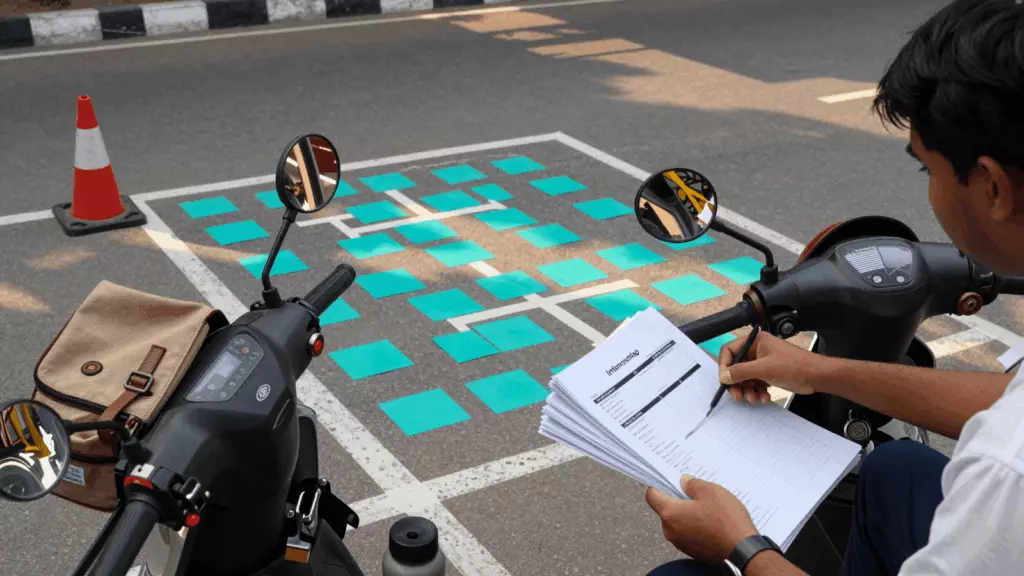
A focused reading or writing review before work or class.
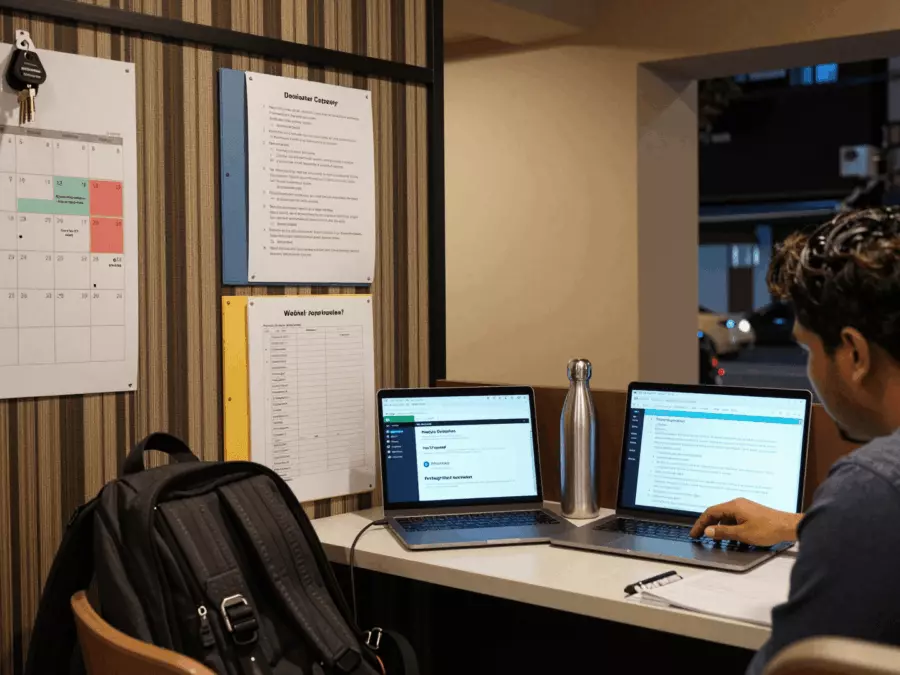
A longer practice and correction session with section tracking.
Section balance prevents fragile score growth
Many learners improve one section while another slips. Each week, identify the weakest section from your latest attempt, keep one stable section from declining, and run a short correction cycle.
Use IELTS practice tests as measurement, not mood. A score should tell you what to correct next.

Writing support should be repeatable
Writing improves through cycles: read the task, draft with structure, mark the highest-probability issue, revise a targeted part, and repeat the task family under tighter timing.
If writing remains the bottleneck after two focused cycles, move into the IELTS writing course so correction becomes part of the weekly system.
Match prep priorities to your Indian learner profile
Students applying for undergraduate or postgraduate routes should confirm Academic requirements early. Scholarship timelines can be even less forgiving, so reading and writing consistency need attention before the deadline compresses the choices. Working professionals need a plan that respects shift cycles and high-load periods. Writing should not wait until the final weeks, and the Speaking section should stay active through short weekly practice.
Healthcare and regulated profession candidates should verify any professional registration language expectations. Preparation should emphasize clear communication, accuracy under timing, and disciplined written responses.
Migration and family pathway learners should verify official requirements, build consistency before complexity, and track section weaknesses carefully. Family responsibilities often make flexible micro sessions more realistic than fixed classroom timing.

Timelines should follow your baseline
A 4 to 6 week plan only makes sense when your baseline is already clear. An 8 to 12 week plan is more realistic for many active students and professionals. A 12+ week plan works better when your schedule is highly variable.
All timelines rely on the same basics: verified requirements, the correct module, writing support when needed, and practice tests used as checkpoints.
Choose the timeline that fits your reality
The right timeline depends on baseline, availability, and target score pressure.
4 to 6 weeks
Use only with a clear baseline and strong weekly availability.
8 to 12 weeks
Best for many students and professionals with moderate consistency.
12+ weeks
Useful when schedule changes or weak sections need repeated cycles.
Final phase
Move toward Band 7 work once section floors are stable.
What Band 7 usually requires in practice
Band 7 usually comes from fewer repeated errors, stronger task interpretation, cleaner writing alignment, and steadier timing. It is rarely the result of one heavy burst of preparation. A practical path is to stabilize section floors first. Then reduce repeat errors, increase timed runs, narrow the gap in your weakest section, and build consistency across retests.
This is where the IELTS Band 7 course becomes more relevant.
It should be used after the foundation is visible, not as a substitute for requirement checks or section basics. No course should promise a guaranteed score. The useful goal is reliable preparation behavior that gives you a clearer route toward your target.
Next IELTS prep resources
Use these pages when the matching need appears in your plan.
Free classes
Start with a low-risk baseline and format check.
Start freeOnline course
Build full section coverage with self-paced lessons.
View coursePractice tests
Use test attempts to diagnose weak sections.
Test smarterWriting course
Add structure when writing slows score growth.
Improve writingAcademic prep
Use this route for confirmed study pathways.
Academic routeGeneral Training
Use this route for confirmed practical pathways.
General routeQuestions Indian learners often ask
Use these answers to choose your next step without turning the plan into guesswork.
If your schedule, module, or starting level is unclear, begin with free classes. If your requirement and study window are already clear, a full online course can be reasonable.
It can be enough when the path is structured and aligned to the destination requirement. Study routes usually need early Academic confirmation plus strong reading and writing work.
Use the official requirement source. Academic is often study-oriented. General Training is often practical, work, or migration-oriented. Do not choose by preference.
Use them as checkpoints every two to three weeks. Each test should lead to one correction action, not a cycle of taking more tests without review.
Use a repeatable writing workflow first: task analysis, structured correction, and timed retry. Then add dedicated writing support if the blocker remains.
Yes, if you combine requirement clarity, section balance, writing support, and timed practice over a sustained timeline. It should not depend on last-minute intensity.
Start your route
Begin with a clear IELTS path
Start free if you need baseline clarity, then move into the online course when your module, schedule, and weak sections are clear.