
IELTS course choice
In-Person IELTS Classes vs Self-Paced Online IELTS Prep
Use this comparison to weigh fixed class times against flexible online study, tuition plus travel against course access, and live accountability against self-paced follow-through.
 Local structureOnline flexibility
Start with the real tradeoff
The comparison is practical: which route produces finished study hours and usable practice-test data, with reviewed writing built into the week you actually live with?
Why learners search for IELTS classes near me
The phrase IELTS classes near me usually signals a need for outside structure. Learners searching that way are not just looking for a room; they are looking for a timetable, an expected attendance pattern, and a study space away from home distractions.
That need is real.
After work or during a family-heavy week, a fixed class removes one decision: when to begin. The classroom, the teacher’s presence, and the posted timetable become part of the study system. For some learners, that external pressure is what turns good intentions into actual practice.
Online searches come from a different version of the same pressure. Learners want lower travel cost, access outside office hours, and a way to continue after a schedule change. The choice is not quality versus convenience; it is the obstacle you are more willing to manage, whether that is commuting to a fixed class or keeping yourself accountable when nobody is waiting in the room.

Decision anchor
Define success before choosing format
Before comparing providers, write down four details: the band you need, the test date, the weakest section, and the weekly study windows you can protect. Those details turn the format choice from browsing into a real decision.
Band 8 in ten weeks and Band 6.5 over six months require different systems. Time pressure changes the support you need, especially when Writing or Speaking is holding the score down.
Quick format comparison
Use this as a first filter, then test the choice against your own habits.
| Factor | In-person classes | Self-paced online prep |
|---|---|---|
| Schedule | Fixed class times | Flexible study windows |
| Accountability | Teacher and peer pressure | Self-managed or app-guided routine |
| Cost burden | Tuition plus travel | Course access with little travel cost |
| Questions | Immediate in-class answers | Asynchronous support and replayable lessons |
| Practice loops | Often tied to class pace | Easy to repeat tests and reviews |
Where in-person classes help
In-person learning suits students whose hardest step is starting and staying present once study time begins.
What Works Well
- Attendance lowers the effort needed to start studying after a long day.
- Teacher presence and peers can create useful pressure to keep going.
- A separate classroom can protect focus when home study is noisy or interrupted.
- Beginners may understand the exam faster with visible pacing and direct explanation.
What To Watch
- Commuting and fixed times can reduce completion when your schedule changes.
- Class attendance does not guarantee homework, writing revision, or test review.
- The class pace may be too slow or too fast for your weakest section.
- Missed sessions can create gaps that are hard to recover quickly.
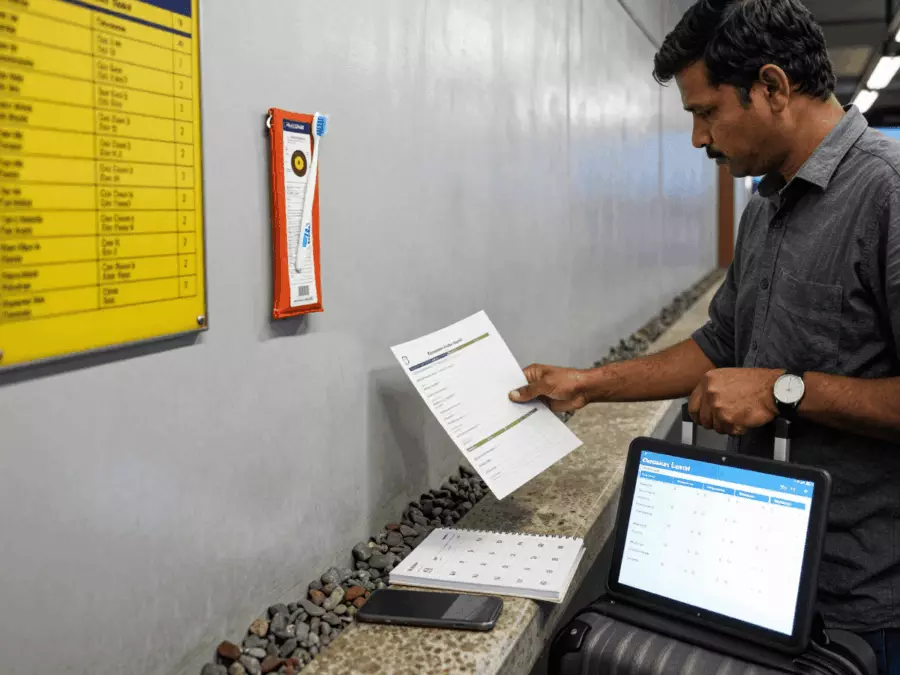
Classroom fit
In-person works when structure is the bottleneck
If solo study keeps getting postponed, a local class is a sensible first move. Its value is not the room itself. The value comes from an enforced start time, visible progress, and the pressure of showing up around other learners.
That structure still has to lead somewhere. Look for homework review, regular writing output, and mock-test follow-up before you commit. Without those pieces, attendance may feel productive while the same score problems keep returning.

Online fit
Online works when flexibility protects consistency
Self-paced prep fits learners whose weeks change without much warning. Work shifts, caregiving responsibilities, health interruptions, and travel make a fixed class hard to attend, even for serious test-takers.
The advantage is not simply convenience. Moving the study window keeps the plan alive on days when a class would be missed. A structured IELTS Online Course works best when it gives a clear path through the sections and fast routes back to weak points.
Cost and schedule matter more than tuition alone
Compare the actual costs side by side. In-person study includes tuition plus travel, and sometimes parking or printed materials. It also carries a missed-session cost: a paid class hour disappears when work or family plans change. Online study removes the commute and keeps lessons available outside office hours, but it moves the discipline problem into your home study setup.
That tradeoff matters.
Count only completed meaningful hours. A meaningful hour means a timed task, an error review, a corrected essay, or a focused section drill. A lesson playing in the background is not the same as work that changes the next attempt.
For changing schedules, online access protects completion better than a class you repeatedly miss. For learners who never start alone, local structure may justify the extra cost. The better investment is the option you can sustain for eight to sixteen weeks.

Use free classes as a fit test
Free material gives you a small trial before you commit money. Check whether the teaching style makes sense to you, whether the lesson sequence feels usable, and whether the practice tasks push you to do more than watch.
Start with Free IELTS Classes when you want a low-risk way to see whether online study feels clear enough to continue this week.
What every full course needs
This checklist matters whether the course is local, online, paid, or free-to-start.
Baseline placement
Know your current level before planning.
Section progression
Study Listening, Reading, Writing, and Speaking deliberately.
Timed writing output
Write under exam pressure every week.
Regular practice tests
Measure readiness with repeated checkpoints.
Revision decisions
Change the plan based on error patterns.
Where format differences matter by section
Reading usually improves through repeated timed exposure and careful error analysis. In-person classes add discipline when that is the missing piece, while online prep gives more repetition without travel overhead. Listening needs short, frequent practice blocks; a classroom creates focus at the beginning, although many learners still need repeated unsupervised drills to improve concentration and transfer.
Writing exposes a format mismatch quickly.
If Writing is your lowest band, inspect the course for a weekly draft, usable feedback, revision time, and a later check on the same problem. Attendance alone will not solve a weak writing loop. Speaking benefits from live interaction when answers are full length and reviewed afterward, so avoid any course that treats Speaking as casual conversation only.

Prioritize writing if it limits your score
Writing improvement depends on a loop: plan, write under time, review errors, revise, and try again. That loop should start early, not in the final week.
Use an IELTS Writing Course for task method and the IELTS Writing Checker when you need faster draft-to-revision feedback.
Two risks to compare honestly
Most poor choices fail for predictable reasons: missed attendance or passive online consumption.

Fixed schedules can break when work or family needs change.

Flexible access only helps when tasks and review are completed.
A four-week decision test
If both formats seem plausible, run a short comparison instead of choosing by impression.
Set the same target
Use one target band, one weak section, and one weekly time budget.
Test online completion
Try free lessons, two section drills, and one writing revision week.
Test local completion
Track attendance, homework, outside practice, and recovery after missed days.
Choose by evidence
Pick the path with stronger completion and mock-score trend stability.
A practical hybrid path
Many learners combine online flexibility with human accountability instead of treating the choice as permanent.
Week 1
Use free classes and a baseline test to identify weak sections.
Weeks 2-3
Follow online modules and schedule one writing revision cycle per week.
Week 4
Take targeted section tests and review errors by cause.
Next month
Add a local study group or mentor check-in if accountability is slipping.
Use practice tests as the bridge
Practice tests are the fairest way to compare formats because they show whether preparation transfers into timed performance. Without testing, both in-person and online study can feel productive while hiding weak habits. Plan a full mock every two to three weeks and targeted section tests every week, then log error causes instead of only scores. That record should decide the next week of study.
Do not skip the review step.
Use IELTS Practice Tests as the baseline before your exam date.
Next resources for your choice
Use the route that matches the weakness your comparison revealed.
IELTS Online Course
For structured self-paced progression.
Course pathFree IELTS Classes
For a low-risk fit check before paying.
Start freeIELTS Practice Tests
For readiness checks and trend tracking.
Test planIELTS Writing Course
For task method and writing structure.
Writing helpWriting Checker
For faster draft review and revision.
Review draftsDecision framework
Return to the four-week comparison test.
Use the rubricFinal verdict
Choose in-person if external structure is your biggest missing piece. Choose online when movable study windows and repeatable practice make completion more likely.
Best For
- Learners with changing schedules
- Students who need repeatable tests
- Writers who need weekly revision
- Budget-conscious long-cycle prep
Not For
- Learners who never start alone
- Home study spaces with constant interruption
- Students who need immediate live reassurance
Common questions
Only if the local class gives you better completion, writing revision, and practice-test review. The room itself is not enough.
Use free classes to test fit and learn basics. Most learners still need structured progression, timed practice, and review to avoid a plateau.
Choose the format that gives you a weekly writing loop: timed draft, feedback, revision, and retest. Writing support should start early.
Use full mocks every two to three weeks and targeted section tests weekly. Review mistakes before adding more tests.
Yes. A hybrid path works when it has one weekly plan, clear section targets, and one place where test results are tracked.
Online path
Build a prep system that fits your week
Start with free lessons, move into structured online study when needed, and use practice tests plus writing support to keep progress measurable.