Skip to content

IELTS exam prep

Free IELTS Mock Test: How to Use Practice Tests Correctly

Learn how to use a free IELTS mock test as a real diagnostic tool with realistic sequencing, section timing, review workflow, weak-point diagnosis, and retest planning that supports steady IELTS…

Start free classes

Workflow

Practice loop

Use a repeatable sequence so preparation turns into measurable progress.

1

1. Set baseline

Use one controlled attempt to find the real starting point.

2

2. Use timing

Keep conditions stable so results are comparable.

3

3. Log errors

Record repeat mistakes by root cause, not by emotion.

4

4. Retest later

Retest only after changing one clear variable.

Action list

Use this before the next step

A short checklist keeps the page practical instead of theoretical.

Know your goal

Define the score and route before study volume.

Use the right page

Move to the linked core page that matches the need.

Measure progress

Retest only after focused revision.

Avoid guarantees

Treat improvement as a system, not a promise.

Practice workflow

Practice only matters when it changes the next step

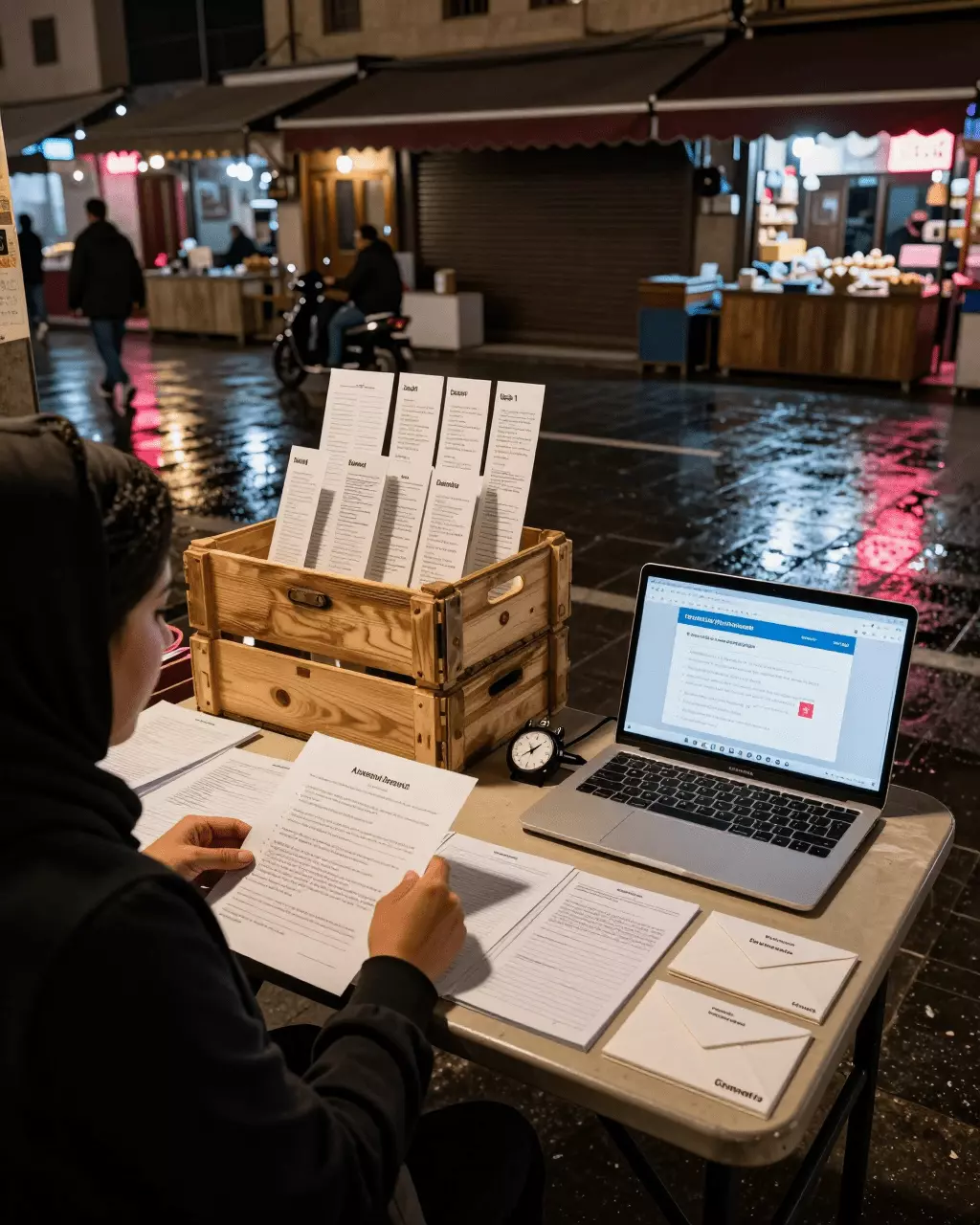
Show a timed test or practice dashboard that leads into diagnosis instead of presenting a score as the whole result.

a South Asian woman in her late 20s reviewing an IELTS online course workflow

Why a free IELTS mock test matters

Many learners treat a mock test like a free simulation they complete once a month. The better approach is to treat it as a diagnostic instrument:

It tells you your current reliability under timed pressure. – It reveals your section-level bottlenecks. – It shows where your method works and where it collapses. – It helps you allocate study time based on evidence, not anxiety.

Think of a mock test as a clinical tool. A doctor does not prescribe a treatment after one symptom scan alone; they use repeated checks plus context. The same principle applies to IELTS. A single mock score is a clue, not a diagnosis. A pair of mock tests with structured review is a signal. A monthly score trend is the first useful pattern.

A free IELTS mock test can be powerful if you use it in a system:

Choose a test version you can complete under realistic conditions. 2. Time and sequence the sections correctly. 3. Record outcomes in detail immediately after completion. 4. Diagnose the root causes, not just the wrong answers. 5. Retest after changing one variable in your process.

If you skip any of these, your mock tests become busy work. If you complete all five steps, mock tests become a reliable map.

Before you start: what a mock test is and is not

A free mock test is a practice instrument, not an official prediction. Even when a platform labels something “IELTS mock test,” the score from one attempt cannot replace a real official result.

An official test confirms your band. – A mock test reveals readiness and patterns.

That distinction prevents two common errors:

If you score low once, you may feel behind; if you score high once, you may feel overconfident. Either reaction is misleading. You need trend lines and pattern quality.

Error 2: Chasing high marks on every attempt

Test takers often change their behavior because they only care about the number. You should care about process quality first:

Was timing realistic? – Which question types failed? – Was writing task planning accurate? – Which section consistently drifts into time pressure?

Your score is the outcome. Process reliability is the cause.

How to select a reliable free mock test

Before timing and sequencing, you need a proper starting point. Your first decision is the test format.

If you are applying to study, you should use Academic-style writing prompts and reading/listening materials that match Academic expectations. If your goal is work, immigration, or general communication qualification, choose General Training.

Do not mix versions for baseline. Your baseline must match your real test pathway.

Choose a complete test versus section-only tests

Use full tests for readiness checks. Use section-only tests for targeted repair after a full test diagnosis.

Full mock every 2-3 weeks – Section drill every 2-3 days on weakest skills

This avoids the mistake of overemphasizing one section and ignoring transfer failure between sections.

Before you start, verify that the mock includes:

Clear section timing instructions – Distinct sections for Listening, Reading, Writing, plus any separate exam-section logistics your real test requires – Scoring or answer keys for objective verification – An answer/report structure you can compare objectively

If a mock test gives only a score without section-level insights, it is hard to diagnose causes. That is not ideal for serious preparation.

Start on the official-like core test pool

For your first set of practice, use the structured core set and build from there. The standard test hub is the fastest route to consistency because it gives learners a calibrated path and predictable section progression. That is the best starting point if you are not sure which mock format to pick. Use your test hub as your baseline reference before adding alternative mock providers.

Step 1: Build your mock-test protocol before day one

The best results come from a fixed protocol that you follow every session.

Choose test version and date. – Book an uninterrupted time block. – Prepare only permitted tools (pen, paper, headset if needed, timer). – Turn off notifications and remove all distractions. – Prepare an answer sheet template matching IELTS format. – Keep two folders ready: – raw answers (raw attempt output) – review notes (errors, root causes, fix actions)

Most people mix raw results and edits in one place and lose trend clarity. Keep your first attempt untouched. Review notes belong in a second place where you store patterns:

exact question type error – probable root cause – planned fix – next retest target

If you want to know whether your weak point diagnosis is real, you need a clean record.

Step 2: Use official timing with realistic sequencing

Mock testing is most useful when your sequencing reflects exam pressure.

Listening 2. 10-minute transfer window (if your source test includes it) 3. Reading 4. Writing

Some exam components may be scheduled separately from the main written test window. Treat those as logistics to record, not as part of this page’s practice-test workflow.

The point is not to follow a perfect clock image; the point is to keep transitions and fatigue realistic.

Listening: 30 minutes test time, plus planned transfer time. – Reading: 60 minutes. – Writing: 60 minutes for both Task 1 and Task 2. – Separate exam-section logistics: record the date, time, and instructions outside the continuous block timing.

If your mock platform gives different transfer or break timing, follow that platform’s instruction but keep these as your own benchmark.

If you test sections out of sequence and out of time repeatedly, your results become unreliable. A learner might score better in a section when tested fresh and fail under cumulative fatigue, which is exactly the opposite of exam reality.

To build readiness, your system should answer:

Can I recover after Listening errors and still control Reading speed? – Can I begin Writing while still mentally loaded by preceding sections? – Do I lose quality when my focus declines?

Step 3: What to do during each section

Below is a practical section workflow you can run repeatedly.

In Listening, most learners either run too fast or overfocus on every unknown word. Neither works under time pressure.

Read the question preview fast to identify item type and key requirements. 2. Stay on task sequence and avoid over-rewinding mental effort. 3. If you miss a piece, move on and return quickly in 20-second windows. 4. Do not backfill everything from memory unless the system allows that logic.

The first five minutes of Reading should not be for solving anything hard. Use them to identify task type, length, and heading patterns.

Skim all headings quickly. 2. Mark passage roles: – location-based search – inference-heavy – detail-heavy 3. Solve questions in planned order and avoid toggling between sections repeatedly. 4. Leave at least 5 minutes for final verification and blank checking.

Writing: control output quality, not volume

Writing should not be a sprint to finish. It should be execution under constraints:

Clear response to task demand – Planned ideas that fit the time available – Controlled paragraph progression

Pass 1 (first 5-7 minutes): identify task type and sketch structure. 2. Pass 2 (remaining time): produce final response quickly, then spend last 8-10 minutes on targeted improvements only.

Avoid rewriting entire pieces under severe time pressure. You get more score consistency from selective revision:

remove unsupported claims, – improve paragraph balance, – strengthen connectors where coherence breaks, – fix grammar errors that alter meaning.

Step 4: Immediate post-test review

Do not skip the review right away. At minimum, review within 30 minutes of completion.

Overall score estimate. – Section scores or performance markers. – Time spent by section. – Number of “easy misses” and “panic misses.” – Top three error patterns.

This first log can be rough, but it must be done before fatigue rewrites your memory.

Mark exact question number and type for each wrong answer. – Group errors by root cause: – misunderstanding the question demand, – time distribution failure, – terminology confusion, – incomplete review at the end, – grammar and coherence break in writing. – Convert each error into one practice action.

If you review too late, you remember the feeling, not the pattern. If you review immediately, you capture details.

How to diagnose weak points without guessing

“I am weak in reading.” – “I am weak in writing.”

That is too broad. Weak points are more useful when broken into micro-systems.

| Section | Symptom | Likely root cause | What to test next | |—|—|—|—| | Listening | Many same-type misses | Prediction strategy too weak | 3 drills focused on distractor types and note-taking timing | | Reading | Correct logic but late completion | Section pacing issue | Paragraph-level time budget and answer sequence discipline | | Writing Task 1 | Good ideas, weak organization | Inaccurate task interpretation | 2 mini-plans using chart type framework | | Writing Task 2 | Weak argument development | Not enough position control | 2 argument maps per prompt before drafting | | Separate section logistics | Missed or unclear scheduling | Test-day plan not recorded clearly | Add appointment details and instructions to your exam checklist |

Build your error categories before any retest:

Task response errors – Did you answer what the question asked? – Did you miss constraints (e.g., compare/contrast, causes/effects)? – Timing collapse errors – Did you use too much time on one question type? – Were you checking too late? – Language precision errors – Do errors change meaning or only tone? – Method errors – Did you follow the section model consistently? – Recovery errors – Did you recover efficiently after a miss, or did you spiral?

Do not track every spelling mistake in detail. Track transferable failures first.

Build your mock-review data into a practical action plan

At this stage, numbers are only useful when converted into actions.

Create a weekly plan from your error map:

Focus section 1: 3 sessions – Focus section 2: 2 sessions – Maintenance section: 2 short sessions

5-minute warm-up. 2. 35-60 minutes of targeted work. 3. 15-minute reflection against mock error notes.

Complete one timed Task 1 and one timed Task 2 prompt. 2. Use tool-based rapid feedback for error spotting on meaning-critical mistakes. 3. Rewrite once using a targeted correction goal (for example, thesis clarity first, then evidence quality). 4. Retake one comparable writing prompt after 48-72 hours.

If your first rewrite score markers improve but final task quality still fluctuates, move to structured writing methodology support.

This is where a guided writing path is usually the most efficient next step, especially if repeated writing drafts are not turning into cleaner criteria performance.

How often to retest and when to repeat

Retest frequency is where many learners make the biggest mistake.

Too frequent retests usually only measure noise. Too rare retests miss momentum.

Run a full mock every 10-14 days for stable learners. – Run section-level retests every 3-5 days for targeted weaknesses. – Never retest the exact same weak area immediately after a heavy correction attempt without a short buffer.

you can describe one clear method change. – you have trained it at least 3 sessions. – your prior errors were clearly tied to one process flaw.

you only changed “effort,” not method. – your logs show unresolved cross-section fatigue. – you are still guessing question types without objective review.

When in doubt, add one recovery gap and retest after your method upgrade.

Retest the section you changed the most. 2. Keep the section you changed least as a control. 3. Compare both outcomes after 5-7 days.

If your controlled section collapses, your method may be too brittle. If your targeted section improves while the control stays stable, you found a genuine win.

Turning weak sections into targeted targets

This is the core of correct mock-test use: you should never attack all sections equally at once.

Scenario A: Reading is weak, writing is stable

Keep writing frequency at maintenance level. 2. Add two reading speed-control blocks and one question-type block daily. 3. Use one short mixed reading mock to test transfer. 4. Re-test Reading after 72 hours of method work.

Prep sequence

The practice-test cycle

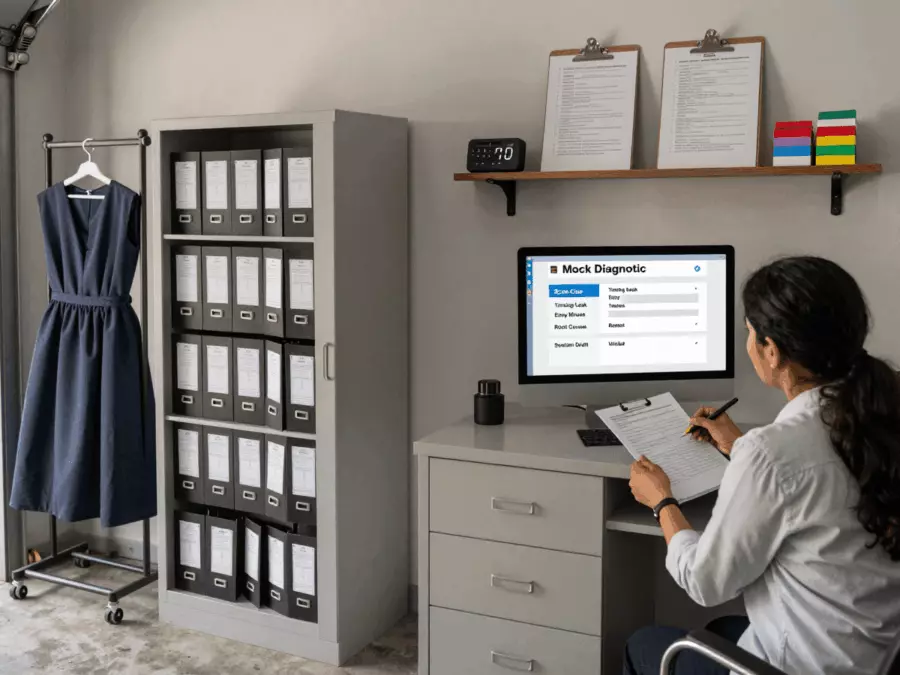
The sequence should show test setup, focused concentration, and review after results.

an Arab man in his early 30s working through Simulate
Step 1Simulate

Take the task under controlled timing.

Reading your score trend like a strategist

Score trend is not a line. It is a map with noise.

Reliability check: Is your section timing more consistent week over week? – Error pattern check: Are the same types of misses shrinking? – Transfer check: Does improved section control appear in other sections?

Instead of only trusting your total score, track:

section-level best minus worst – average time overrun – repeated question-type misses – writing correction consistency

should I improve method or speed? – should I focus on task interpretation or lexical control? – should I retest full mock or sectional mock first?

This is how learners avoid wasted prep cycles.

The role of free classes after mock diagnostics

A free mock test is a diagnostic tool. At some point you will need interpretation help to change behavior faster.

This is where free IELTS classes can be useful.

You can complete tests but cannot stop repeating the same failure. – You can identify weakness but not convert it into a practical routine. – You need live answer interpretation, pacing coaching, and section-specific feedback.

In that case, a short free class session is usually best used as a method review, not just motivation.

Ask for: – one targeted section review, – one correction framework, – one next-step plan for the next week.

If classes are helping and you need depth, you can then shift to a full course structure.

When a full IELTS course becomes the better option

A full-course path is usually right when your mock cycle becomes repetitive:

You are improving only in one dimension. – You keep fixing basics but not transfer. – You do not have a study rhythm for weekly planning.

At that point, moving to a structured online pathway can prevent drift. Structured programs are particularly useful for learners who need:

weekly checkpoints, – clearer section priorities, – integrated writing and reading feedback, – and progression metrics beyond one-off mock scores.

The online path is not only “more lessons.” It is repeatable planning discipline. That is the missing variable for many learners who can already study alone but not consistently.

Writing-specific mock-test workflow: where quick tools help and where they stop

Writing is often the section where mock scores are least trusted, because it combines task understanding, accuracy, and communication quality under time pressure.

If you want quick diagnosis immediately after a mock writing task, use an automated review step for repeat issues and meaning-impacting language patterns. This helps you decide whether the current miss is:

a transferable habit, – or a one-off drafting lapse.

That is useful, but only as a first filter.

idea development, – argument support, – paragraph control, – task fulfilment quality,

then you need structured writing method coaching. That is where a guided path is usually more effective than isolated mock attempts.

Use the right pathway: – Use a fast checker workflow for immediate pattern capture. – Use a writing coach course for method redesign, long-form consistency, and exam transfer.

This is the fastest practical route for most learners who plateau after repetitive writing drills.

Section sequencing mistakes that erase gains

You can lose progress through sequencing errors even when you study hard.

Mistake 1: Full mock tests too often without section drills

Doing only full mock tests builds anxiety loops. You may feel busy, but root causes stay hidden because you are not isolating question-type failures.

Fix: add 2-3 section drills between mock attempts.

Mistake 2: Retesting same weak section with same method

If your method is flawed, repetition only compounds the flaw.

Fix: define one method change first, then retest.

Right answers rarely tell you why you were unstable. Wrong answers tell you exactly where to work.

Fix: log each wrong answer with cause category immediately.

Mistake 4: Treating a high mock score as completion

Many learners assume a single high score means readiness. Readiness is a stability state.

Fix: continue section checks, transfer checks, and retests in target areas.

Mistake 5: Ignoring separate exam logistics

Even when your main focus is Listening, Reading, and Writing, separate exam appointments and instructions still affect readiness. Ignoring them causes avoidable test-week stress.

Fix: keep a simple logistics checklist with date, time, ID requirements, platform instructions, and arrival or login rules.

Use this planning model for 4 weeks

Here is a practical cycle you can run starting today.

Take one full mock test. – Record section performance details and timing. – Build a root-cause map. – Identify two priority weak points, no more.

Train priority Point A with 3 section drills. – Train priority Point B with 2 section drills. – Use concise review logs and one mini mock per weak area. – Do not jump into full retest yet.

Retest your top weak sections. – Run one mini full test (or a half-stack simulation depending on fatigue). – Compare with Week 1 data: – Was error type reduced? – Is timing more stable? – Did transfer improve?

Take a revised full mock test. – Compare: – total and section trend, – error quality, – stress handling. – Decide next step: – continue solo correction, or – move to free class support, or – join structured course for system scaling.

This cycle is flexible. You can repeat it every 4-6 weeks.

Writing your own error log template

Test date: – Test format: – Total score estimate: – Section timing: – Top misses and causes: – Root causes: – Section action: – Retest date:

Keep it in one document and track two trends:

improvement in section reliability, – reduction of repeated cause categories.

This log is your single strongest prep asset. A score number without this log is easy to forget. A log gives you action.

Build a realistic mock-test cadence by goal band

No single cadence fits everyone. But typical patterns are useful.

What to do if progress stalls

If after 2-3 cycles your scores still do not reflect your study effort:

Audit your test environment first (timing, sleep, distraction). 2. Compare logs for method consistency. 3. Reduce mock quantity and increase review depth. 4. Replace “test more” with “test smarter.” 5. Add one external support option: – free coaching session, – guided online learning track, – writing-specific method support.

This is not a sign of failure. It is a sign your preparation loop is too thin in interpretation.

Common mock-test pitfalls and practical corrections

Some learners begin with a 4-week plan to jump two bands. That often causes fatigue and poor retention.

Correction: set process milestones first, then target band milestones.

Pitfall: Ignoring transfer across sections

Improving one section does not guarantee improved total performance.

Correction: use weekly transfer checks and cross-section notes.

Finishing every test at a different pacing and calling all results comparable creates false trends.

Correction: keep timing rules consistent for each mock attempt.

Pitfall: Leaving separate exam logistics until test week

Late logistics checks create unnecessary stress and can distort your final review plan.

Correction: confirm separate appointments, ID rules, test format, and timing details before your final week.

Pitfall: Treating automated feedback as final truth

Automated insights can point to recurring language patterns but should not be your only judge.

Correction: combine immediate feedback with manual review and mock transfer checks.

What a correct mock-test routine looks like in practice

Here is a realistic routine you can run each week:

Monday: full section review from previous test + 1 section drill. – Wednesday: targeted mini mock for one weak section. – Friday: second section drill plus exam-logistics check. – Weekend: full or half-length mock depending on fatigue and prior recovery.

This pattern gives you repetition without burnout. Burnout is often the reason learners stop after weeks of “productive” study.

Final next-step framework

When a learner asks, “Now what?” after taking a free IELTS mock test, the answer is usually one of these:

Continue with a tighter self-directed cycle if your logs are strong. – Join free IELTS classes if your process is not converting to consistent outcomes. – Shift into a structured full-course format if your planning needs stronger checkpoints. – Add focused writing tools and writing coaching if writing remains your largest, repeated leak.

For most learners, the right next action is one specific:

choose one dominant weakness, – define one weekly intervention, – set one retest date, – and keep the same review format until it changes.

That is how a free IELTS mock test becomes useful instead of overwhelming.

If you only remember one thing: A free mock test is not the same as readiness. It is the fastest way to create actionable readiness if you control sequence, timing, review, diagnosis, and retesting logic.

Use your mock tests this way and they stop being an event you do once in a while and become a system you can trust.

Make practice measurable

Practice works when the conditions are stable enough to compare. For free IELTS mock test, the learner should record timing, question type, mistake pattern, and the exact follow-up lesson or drill. Without that record, another test only creates another score. With it, every attempt tells the learner what to fix next.

Do less random testing

A better routine is to alternate controlled study with targeted retesting. Use full practice tests when readiness is the question, and use section drills when one skill is the problem. This protects energy and keeps the course path connected to the data instead of replacing lessons with repeated tests.

Next step

Start free, then choose the next level

Turn the score or weak section from this page into the next course lesson, writing review, or practice-test cycle.

Start free classes

a Latina woman in her late 20s choosing the next IELTS prep step online