
Nigeria to Canada
IELTS for Canada From Nigeria: Build the Right Prep Plan First
Choose the right IELTS module first. Then set section targets and use online prep with writing support and practice tests so your Canada route is not based on guesswork.
 Module firstWriting support
What to Decide Before You Study
A Canada goal is not one single IELTS path. Your first job is to connect the test plan to the official requirement.
Start With the Canada Outcome
The first decision is not which course to buy. It is the exact Canada-related outcome you are preparing for from Nigeria.
That outcome might be university admission or professional registration. It might also be migration, employment screening, healthcare work, family planning, or a route that combines more than one purpose. When the outcome is vague, preparation becomes expensive and repetitive: the wrong module, the wrong writing task, or a test booking made before the section scores are stable. A better first week is evidence-led. Collect the route documents, list the accepted tests, note the module, and record any section minimums.
This is especially practical for Nigerian candidates balancing work shifts, family responsibilities, data costs, and shared devices. Changing schedules matter too. A plan built around confirmed requirements survives disruption better than a plan built around a guessed overall band.
Once your outcome is known, choose the preparation path that matches it. For broad work or migration goals, the IELTS General Training course is usually the more relevant route. For university or postgraduate study, use the IELTS Academic preparation course after checking the institution requirement.
Academic or General Training?
Use the requirement, not preference, to choose your module.
| Module | Often fits | Check before booking |
|---|---|---|
| General Training | Work, migration, practical routes | Program accepts General Training |
| Academic | University or formal study | Institution requires Academic |
| Mixed goals | Study with work fallback | Primary route is confirmed |
| Regulated roles | Healthcare or licensing paths | Body-specific language rules |

Build a Full Score Model
Do not plan around one overall number. Build a model with a target band, section floors, a small buffer for normal attempt variation, and a deadline map for booking and document submission.
This makes your practice decisions clearer. If writing is under the floor but listening is stable, your next cycle should not give both sections equal attention.
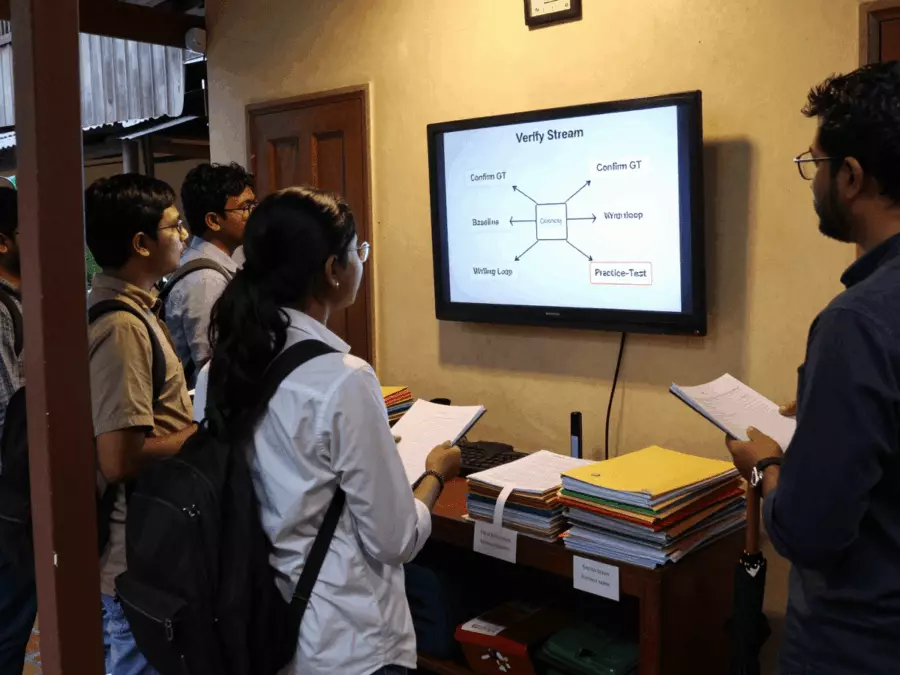
A Practical Prep Route
Move from uncertainty to structured preparation in a controlled order.
Verify the route
Confirm the accepted test, module, score, and deadline.
Run a baseline
Test all four sections and tag repeated errors.
Start free
Use Free IELTS classes to test teaching fit.
Choose the core path
Use the IELTS online course for steady sequence.
Add weak-section help
Use writing support when errors repeat across prompts.
Retest the trend
Use practice tests to check stability before booking.
Why Online Self-Paced Prep Fits Many Nigerian Schedules
For many learners in Nigeria, an online-first structure is the workable option because the week can change quickly. Work and family pressure may cut into study time. Power, bandwidth, and location can also affect whether a learner can join a long live session.
A strong online plan still needs structure. Look for orientation, section sequencing, guided correction blocks, writing review, timed checkpoints, and a readiness cycle. Content without checkpoints is easy to consume but hard to turn into score movement.
A practical cadence can be simple. Use two or three focused section sessions in a normal week, keep one writing revision session protected, and run a checkpoint every seven to ten days. A full-style test every two to three weeks is usually enough to see whether the pattern is improving. If a week collapses, reduce the plan to one core section block, one writing pass, and one checkpoint log instead of restarting everything.
Free lessons are useful for method fit and direction checking. They are not the same as a full preparation route.
After that first diagnostic stage, a structured course can connect section lessons with writing correction and practice tests in one routine.
Before You Invest in Full Access
Use these checks before moving from free entry to a deeper course plan.
Module confirmed
You know whether Academic or General Training applies.
Baseline complete
All four sections have been tested at least once.
Weak section named
One or two recurring patterns are visible.
Weekly time is real
Your plan fits your normal Nigerian schedule.
Free fit tested
You have tried lessons before committing deeper.

Make Writing a Core Loop
Writing often feels stuck because the improvement comes from repeated correction, not from one more sample answer. Use a steady loop: read the task carefully, plan the response, draft for task achievement, revise against criteria, then try a fresh prompt.
If writing remains the main limiter after several cycles, the IELTS writing course should become a regular support path rather than a last-minute fix.
Balance the Four Sections
Keep the weakest section in focus without abandoning the others.
Listening
Track question families, directional words, and the exact reason for each missed answer.
Reading
Choose a strategy before the full read and avoid over-checking difficult lines.
Writing
Fix one or two recurring issues per cycle so revisions transfer to new prompts.
Speaking
Practise timed planning, concise organization, and recovery after weak answers.
Use Practice Tests as Feedback
Each test should change the next study cycle.

A realistic attempt gives you useful pattern data.

The review decides what to practise next.
Practice Tests Should Create Instruction
Practice tests are useful only when the result changes your routine. Complete a focused test, identify the section and question-type errors, choose one or two adjustment priorities, practise those weaknesses, and retest the pattern.
Do not react to one strong mock or one weak mock as proof of readiness. Compare at least three checkpoints, especially for writing and timing. A stable trend with fewer repeated errors is stronger than a single score peak.
Use IELTS practice tests as checkpoints, not decoration. If your section scores bounce but the same error pattern remains, keep correcting the pattern before booking.
When score stability is visible and writing has become more controlled, the IELTS Band 7 course can help shift the work from broad correction into precision.
A 12-Week Baseline Plan
Adjust the timeline to your deadline, but protect the checkpoint rhythm.
Weeks 1-2
Confirm outcome and module, run baseline, and build error categories.
Weeks 3-6
Work through section foundations and writing correction cycles.
Weeks 7-10
Combine skills into test rhythm and target recurring weaknesses.
Weeks 11-12
Stabilize section floors and rehearse booking readiness.
Plan Around Real Access Constraints
If internet access drops or power is unreliable, split tasks by bandwidth. Save low-bandwidth time for notes, error logs, short drills, and review. Use stronger access windows for full classes and timed simulations.
The goal is durable weekly momentum, not perfect daily study. A plan that can survive interruptions is more useful than one that only works in an ideal week.
Common Mistakes That Cost Time
The most expensive mistake is confirming the module after heavy study investment. Academic and General Training overlap in some skills, but their writing tasks and use cases differ enough that a late switch can waste weeks.
The second mistake is treating the overall band as the only measure. A Canada-related pathway may set section minimums or document rules that matter as much as the headline score. Timing and validity windows can also affect when the result is useful. A stable overall band can still hide a weak writing floor.
The third mistake is using free access as complete proof. Free classes can show teaching fit and reveal weak sections, but deeper preparation needs progression and checkpoints. It also needs correction loops for the errors that keep returning.
The fourth mistake is ignoring writing until late. If writing is unstable, give it a scheduled block from the beginning and add structured help before frustration turns into random strategy switching.
FAQ for Nigerian Candidates
Short answers for common planning questions.
Yes, if your routine has checkpoints. Two focused section blocks, one writing block, and one review cycle can still create progress.
Choose the module required by your school, program, employer, licensing body, or immigration route. Do not choose by difficulty or hearsay.
Add it when writing errors repeat across multiple prompts or when writing is the section most likely to fall below your target floor.
Use them to find error patterns and score trends. A test is useful only when the review changes what you practise next.
Reserve low-bandwidth windows for notes and review. Use stable access for video lessons, timed tests, and full simulations.
Move toward Band 7 work after your module is confirmed, your section floors are mostly stable, and broad errors are no longer repeating.
Related IELTS Prep Paths
Use these pages when your next step is clearer.



Next step
Turn Your Canada Goal Into a Weekly IELTS Plan
Start free, confirm your module, then build a structured online routine with writing support and practice checkpoints.

Related IELTS resources
Use these links for the next preparation steps referenced in this guide.
IELTS General Training course
Continue with this related IELTS preparation step.
Open resourceIELTS Academic preparation course
Continue with this related IELTS preparation step.
Open resourceIELTS online course
Continue with this related IELTS preparation step.
Open resourceFree IELTS classes
Continue with this related IELTS preparation step.
Open resourceIELTS practice tests
Continue with this related IELTS preparation step.
Open resourceIELTS writing course
Continue with this related IELTS preparation step.
Open resource