IELTS exam prep
IELTS Online Course Philippines: Self-Paced IELTS Prep With…
Discover a practical IELTS online course designed for learners in the Philippines, with free classes, flexible study plans around work and family, and clear pathways for Academic or General exam…
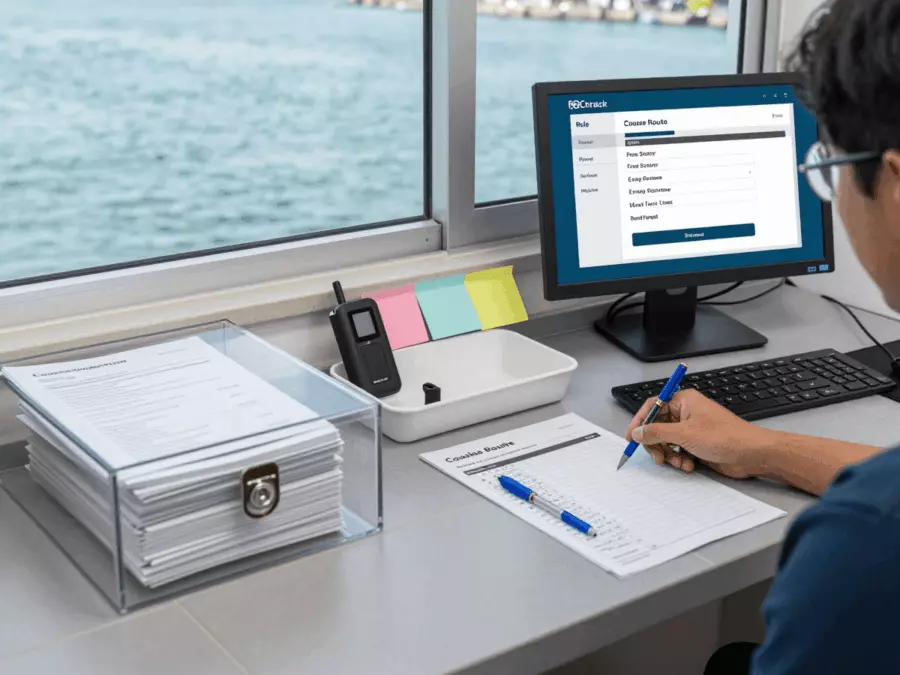
Local planning
Philippines IELTS path
Start with official requirements, then choose the online route that fits your schedule.
A practical opening note before you decide
If you are targeting migration, university admission, licensing exams, or a promotion, always check the most current official requirements from the relevant body before you finalize your score timeline. University admissions offices, employers, licensing authorities, immigration departments, and test centers can change minimum score rules, document lists, and test format requirements.
Use this as a checkpoint: confirm official requirements for your specific destination and target date before committing to a fixed study calendar. That is not a detail to do later-requirements are the reason many learners miss their first attempt window.
Why Philippines learners often benefit from online IELTS prep
For many learners in the Philippines, “online” is not a convenience feature; it is the only realistic format.
A lot of candidates in Metro Manila, Cebu, Davao, and provincial hubs have jobs with rotating shifts or freelance workflows. Students and early-career professionals also face family responsibilities, transport constraints, and exam travel limitations. A self-paced model helps because your study time becomes portable and not tied to one room, one instructor slot, and one weekly class time.
You can train in smaller, repeatable blocks:
25 to 40 minutes on weekdays – 60 to 90 minutes on lighter weekends – a short mobile revision on commute-safe windows
This is impossible with rigid classroom attendance models and is exactly why online learning becomes practical for many Philippine learners.
Consistency is easier to preserve than intensity
Study workflow
Local goals still need a structured online path
Show the learner connecting country-specific goals with the same online course, test, and writing-support workflow.

Most people think exam preparation success comes from marathon sessions. In reality, success usually comes from consistent weekly cycles. The benefit of online learning is not that every session is perfect; it is that you can return quickly after interruptions.
If you miss one Sunday, online prep lets you restart from your last module the next day. If you are preparing for both IELTS and work obligations, one skipped day becomes a temporary delay, not a collapsed calendar.
Language growth is not one-size-fits-all
Many local students and candidates in the Philippines move between English-heavy school environments and mixed language environments at home. A good online structure allows you to layer foundational vocabulary and exam-specific expression at a rate that matches your confidence.
This matters when you are preparing for both academic and migration goals at once. The same learner can take a practical weekly path, keep speaking section awareness, and focus on writing coherence and reading timing for final score movement.
What a strong online IELTS course should include in this context
If you open multiple pages and each looks like generic lesson archives, you are not seeing a course; you are seeing content. A real course has sequence, checkpoints, and transfer loops.
For learners in the Philippines, that usually means:
clear level entry points – module order for all sections (not just one section at a time) – repeated opportunities to review mistakes – a schedule model for irregular routines – a link between free classes and full access – explicit next steps for writing and scoring bottlenecks
If a website does not show these elements clearly, it can still provide useful videos, but it is not a full preparation system. This distinction is especially important for first-time test takers who often mistake volume for structure.
Do we offer local in-person IELTS classes in the Philippines?
No. This resource is for online IELTS preparation and does not claim local in-person classroom classes inside the Philippines. That does not reduce value; it changes expectations.
You should compare local and online options as different systems:
In-person classes: fixed times, fixed locations, fixed pace, better for learners who need physical attendance support. – Online self-paced: flexible access, repeatable lessons, higher compatibility with shift or family schedules.
For many, especially those searching for flexible options while managing work, online is the only setup that can stay consistent for months. But if your only preference is live social learning, a pure online model still requires discipline and independent planning.
Who this page is for
learners in the Philippines searching for an affordable and flexible route – people planning around irregular work schedules – students balancing IELTS with family commitments and exam administration deadlines – candidates trying to decide Academic vs General Training – learners using free classes as a testing ground before moving to a paid full access plan – people targeting Band 6.5+ and Band 7 trajectories
It is not ideal for learners who must attend a live coaching session in real time every week and cannot do structured solo study. If your learning style needs a live cohort every session, you may still need blended support outside this model.
The free classes entry path: why it matters and what to expect
The first request people make in the Philippines is often, “Are there free IELTS classes I can try first?” That is a good question, because quality online ecosystems vary widely.
A credible free class should answer three questions quickly:
Can you understand lesson structure in under 20 minutes? 2. Can you apply one strategy immediately after the lesson? 3. Do you now have a clear route to your next step?
What free lessons should realistically include
An effective free set for Philippines learners usually includes:
one orientation lesson explaining test sections and score basics – one practical demonstration lesson for each core section at a high level – at least one guided practice sample – a simple self-check method to judge progress – a visible bridge to either continuing free modules or moving into paid structure
This is not about giving everything away. It is about giving enough to show the method and test fit. If the sample content is fragmented, you will not know whether the full course is a good match.
How to use free IELTS classes without overcommitting
complete a full free module once – repeat one activity to test retention – identify your weakest section with that same pilot – decide if you need the full one-year support cycle or a slower route
If you are already deciding on a serious budget, this method prevents overbuying. If you are exploring options, it gives you objective evidence before payment.
For learners who want clarity before committing, start at Free IELTS classes.
Free classes vs full online course: what changes
The jump from free to full is not just payment. It is a change in structure.
You sample content quality and teaching style. – You validate learning fit. – You test one or two study habits. – You get a first signal of your starting point.
You follow a full progression across Listening, Reading, Writing, and the Speaking section. – You get higher-volume practice tied to score goals. – You use recurring checkpoints for section balancing. – You get sustained access through planned tiers and review cycles.
Many learners stay at free level until they are comfortable. That is healthy if it is intentional. The next problem is when learners stay in free mode for too long without building depth. A free phase should lead to a clear decision point, not become a permanent loop.
Full online course design for Philippine learners with unstable schedules
An effective online structure for learners in the Philippines should not assume 7 stable study days. It should assume real life. That starts with a flexible core module map.
Foundations and IELTS context – Listening strategy and timing control – Reading control and question management – Writing structure and revision – Speaking section planning and exam awareness – integrated module review with section balancing – mock-style checkpointing and adjustment cycles
This sequence can be repeated over different durations depending on available study time:
one run for 8 to 12 weeks for active preparation – one longer maintenance run over 3 to 6 months if needed – one-year access path for renewal and retake windows
It is common to over-focus on one area. In reality, IELTS scoring is not a section lottery. You need all four sections to move consistently. If writing improves but reading is weak, the result can still be capped.
The online structure for a practical learner should include regular balancing checks:
What has improved this week? – Which section still consumes too much time? – Which mistakes repeat under pressure? – What is the highest-impact shift for next week?
This is where people see the biggest return over six to ten weeks.
Academic vs General Training: selecting correctly
In the Philippines, many people study for study plans, migration, and employment. The difference between Academic and General Training is often misunderstood.
university admission – academic publication reading – research-heavy or program-specific English demand – long-form argumentation and report-style literacy work
migration pathways – professional contexts with workplace communication – social and practical English tasks – broader general-purpose interview and workplace readiness
Do not guess between them. If you know your destination is university, use the Academic route logic. If you are prioritizing migration or professional benchmarks, use the General route logic.
If your plan is not clear, use the comparison pages before locking your plan: – IELTS Academic preparation course – IELTS General Training course
What "one-year access" should support
People in the Philippines often face uncertainty around travel, job cycles, and exam date changes. A one-year access model is not luxury; it is a practical risk-management layer.
time to take a baseline assessment – time to complete a first full cycle – time to apply corrections after a mock or two – time to rest and return before the next booking – space to retake and refine before an important deadline
For candidates with tight deadlines you can still run a compressed cycle inside that year. For long-horizon candidates, one-year access avoids rushing into weak preparation decisions.
Access tier approach (practical interpretation)
Different programs label tiers differently, but an effective model usually includes:
Starter or short window for direct entry and trial study – Core plan for full module progression – Extended plan or annual access for repeats and long-term revision
If your test date moves after an attempted sitting, the annual plan is usually more realistic than short plans because it supports a full re-entry cycle. It also helps candidates balancing family obligations who lose momentum after holidays or work spikes.
Study planning for work-and-family schedules
If your available study time is irregular, your plan should be built from “time available” rather than “ideal schedule.”
Pattern A: 4-5 micro days + 1 long day
20-30 minute listening or reading micro sessions – one short writing response every 2-3 days – one revision session using your writing checklist – one long session on Sunday or rest day for full section practice
Prep sequence
From country goal to IELTS routine
The sequence should feel specific to the learner's study-abroad or migration path without relying on flags or stereotypes.
identify one unfinished section – reduce workload to one core task from that section – complete a correction loop – resume from the next planned lesson
This avoids complete reset and preserves momentum.
How to integrate free classes, full access, and specialized support
Free classes for fit and method checks 2. Full online sequence for structured growth 3. Module upgrades when bottlenecks appear
Why this layering works for most Filipino learners
Many learners in the Philippines cannot predict their exact study intensity month by month. The layered path supports both high-focus months and low-capacity months without breaking continuity.
If you discover that a full sequence is too broad early on, use free content and a lighter schedule for 1 to 2 weeks. Then return to paid structure at your pace with clearer priorities.
Where practice tests fit in
Practice tests are not just to collect scores. In online IELTS preparation they are diagnostic tools.
which section is holding your performance back – whether timing is unstable in Listening or Reading – if writing control collapses under pressure – what section needs another short intervention cycle
For learners who search for an online course in the Philippines, this sequence is practical:
baseline or diagnostic test 2. module focus on one weak section 3. short review and rerun 4. track error categories, not just raw score
Use IELTS practice tests when your foundation is in place, not just to chase a larger number.
Writing support: how the writing course and checker fit
In many Philippine contexts, writing is the section where candidates feel stuck and want immediate clarity. That is normal.
Your online path should include both broad writing progression and targeted review support:
IELTS writing course gives sustained framework learning – IELTS writing checker helps identify recurring patterns and revisions
The goal is not to produce perfect language every attempt. The goal is repeatable improvement in task response and structure.
attempt one response 2. tag main issues once 3. revise using one or two high-impact rules 4. reassess in a timed follow-up response
Writing support across Academic and General goals
If you need an academic essay response, focus on conceptual development and evidence clarity. – If you need general training writing confidence, focus on directness, register control, and practical task execution.
In both paths, a checker can help track repetition patterns, but your long-run gain comes from integrating those findings into lessons and timed practice.
Path to Band 7: realistic and structured
Many people say “I need Band 7” as if there is one magic method. In practice, Band 7 requires section stability and fewer repeated mistakes under pressure.
stronger task interpretation accuracy – more consistent timing control – clearer logical progression in writing responses – higher reliability in reading and listening decisions – reduced error spikes when fatigued
If you are in the Philippines and aiming at this target, begin with a staged path:
baseline checkpoint in all sections 2. 4 to 6 week consistency plan 3. targeted correction of top 2 to 3 bottlenecks 4. repeated full checkpoints every 2 to 3 weeks 5. final preparation run and revision stabilization
You can then route your study toward the high-precision path in IELTS Band 7 course when your weak points are clearly identified.
Building a realistic Band 7 timeline
There is no single correct timeline, but this pattern helps many candidates with full-time responsibilities:
finish orientation and baseline – strengthen one section at a time – build daily micro-habits – complete one check-in test
increase timed practice – stabilize writing template and coherence – rebalance around the weakest section – use mock tests to test transfer
repeat corrections across all sections – focus on advanced-level precision – stabilize output with realistic test-day pressure – prepare one final exam readiness loop
This timeline becomes much harder if your study rhythm is irregular for no reason. If irregularity is due to real life, the key is not to compare your weeks to idealized competitors; it is to keep section checkpoints non-negotiable.
Practical implementation notes
If your internet or schedule is unstable, keep lesson blocks short, track visible checkpoints, and use mobile-friendly review steps rather than long sessions.
short, repeatable units (20-40 minutes) – section balancing by evidence, not by likes – weekly checkpoints for errors, timing, and consistency
Common mistakes when searching for online IELTS in the Philippines
Mistake 1: Equating lesson count with preparation quality
More lessons does not guarantee better results. A smaller, sequenced set with checks often outperforms a large unstructured library.
If you cannot match your actual weekly time to the course rhythm, even the best material becomes unused content. Align your schedule first, then choose the intensity.
Many learners treat first test scores as truth and abandon process. Early tests should be diagnostic, then guide revision targets.
Mistake 4: Skipping the full structure after free content
Free classes are a smart start, but many candidates stay there too long. At that point, they know format but have not built a full sequence.
Mistake 5: Confusing Academic and General planning
Learners sometimes start studying with the wrong test orientation and waste weeks reinforcing irrelevant patterns.
Choosing the right online path in the Philippines
Start with a free sample to test method fit. 2. Confirm whether your goal is Academic or General. 3. Run a baseline check by section. 4. Choose whether to continue with full online access. 5. If writing remains your main blocker, plan writing-specific support. 6. If your goal is around Band 7, map a high-precision route once stability begins.
Linking this path to other courses on this site
If you are at the first phase and want to test format, start at Free IELTS classes. If you already know you need structure across all sections, move to IELTS online course. If writing is your repeated blocker, connect to IELTS writing course and use IELTS writing checker for revision speed. If your target is a migration or education score threshold, compare with IELTS Academic preparation course and IELTS General Training course and then place practice pressure via IELTS practice tests. When your section consistency is high and your score targets narrow to band-level thresholds, use <a…
This path keeps the Philippines learner’s journey connected, not fragmented.
A sample 12-week practical plan for Filipino candidates
Use this plan as a starting template, then adapt for your real-life demands.
choose Academic or General logic – complete one free class sequence and one paid starter sequence – diagnose major section leaks – set one weekly and one 2-day micro schedule
complete listening and reading foundations – build first stable writing template – track one recurring error type in writing – run one checkpoint test with review
rotate sections based on error map – increase timed practice windows – run two review sessions using checker support – add practical Speaking section familiarity work
choose top two section weaknesses – run targeted remediation – reduce avoidable mistakes that cost consistency – simulate one full section sequence each week
Weeks 11-12: Exam-readiness stabilization
full exam-condition blocks – final timing and strategy alignment – one final requirement check against score targets and application deadlines – finalize action for retake or booking window
This structure is not rigid. It is a practical template for learners who cannot promise uninterrupted sessions.
How to check your own readiness without over-testing yourself
Can you interpret each task type quickly? 2. Can you produce writing with a clear structure? 3. Are your errors repeating in the same 2 to 4 areas? 4. Are you improving timing across at least two sections? 5. Can you return to study after a week break?
If you answer “yes” to 3 or more by mid-cycle, your path is probably working. If not, you need a correction cycle rather than adding new lessons.
Requirements checklist before you register
Because rules change, add this to your personal checklist:
Confirm required score bands and application deadlines. – Confirm accepted test format and retake policies. – Confirm university, employer, licensing, or immigration score thresholds. – Confirm local test center booking windows and identity/document rules.
Do this before booking any paid review package or retake. It is often one of the biggest gaps in otherwise strong preparation plans.
Next-step options by profile
New learners: start at Free IELTS classes and confirm your preferred format before enrolling in the IELTS online course. – Single-section bottlenecks: combine IELTS writing course and IELTS writing checker with targeted IELTS practice tests. – Academic or migration focus: choose your orientation first through IELTS Academic preparation course or IELTS General Training course and align requirements. – Band 7 seekers: stabilize section consistency, then move to IELTS Band 7 course with a clear retake window in mind.
Final practical summary
This article is built around one principle: practical access for a real life in the Philippines.
Use free IELTS classes to verify fit, then take the full IELTS online course path for structure.
Use the full framework if you are balancing study with family and work. – Keep your module focus aligned to Academic or General goals from week one. – Use writing tools and tests as checks, not as replacements for planning. – Use annual access if your schedule needs re-entry windows. – Move into IELTS Band 7 course once your section consistency is stable.
Questions
Common questions
Yes, if your plan is tied to your real schedule and you treat micro-sessions as training blocks, not side tasks.
No. That is why this path starts with free IELTS classes. You can test fit before moving to a full plan and still maintain momentum.
Yes, but only if you choose the right track from the start. Academic emphasizes academic style and tasks, while General focuses on practical task formats and workplace-aligned writing structures.
Yes. One-year access is useful when your schedule is irregular and you need multiple re-entry windows over a longer period.
Yes. Use the checker to identify repeated pattern issues and the lessons to address the causes.
Yes, if section consistency is already visible and your score movement is controlled. Otherwise stabilize first, then move to IELTS Band 7 course.
Related paths
Where to go next
Use the most relevant next page instead of opening every resource at once.
Next step
Start free, then choose the next level
Connect the country-specific goal to a self-paced IELTS path, then use practice and writing support to keep progress measurable.