Skip to content

IELTS exam prep

IELTS Exam Prep for Filipino Students: Free Classes and…

A practical online IELTS guide for Filipino students and professionals preparing for study, work, migration, healthcare, caregiver, and international pathways. Includes free classes, Academic vs…

View online course

Local planning

Filipino IELTS path

Start with official requirements, then choose the online route that fits your schedule.

Verify the official score, module, and validity window first.
Use Academic for study goals and General Training when your route requires it.
Use free classes to test the method before paid access.
Use practice tests and writing review to adjust weekly work.

Before you pay

Check these first

Use this list before committing time or money to a route.

Official requirement

Confirm module, score, and validity window.

Weekly capacity

Choose a plan your real schedule can sustain.

Writing blocker

Add writing support if errors repeat.

Testing rhythm

Use tests after lessons, not instead of lessons.

Start here: decide your goal in one minute

Before you open a syllabus, answer these four questions:

Is your target goal study abroad, work abroad, migration, professional licensing, or a mixed pathway? 2. Do you know whether the institution or employer requires IELTS Academic or General Training? 3. How many hours per week are realistic in the next 8 to 12 weeks? 4. Can you study on a schedule that changes each week?

If any of these answers are unclear, your best move is to begin with free classes. A free entry lets you test study structure, understand how lessons are delivered, and confirm your starting level before committing to paid access.

For many Filipino learners, this is the main difference between a helpful starting point and expensive confusion:

one path starts with goals and constraints, – the other starts with random resources.

Study workflow

Local goals still need a structured online path

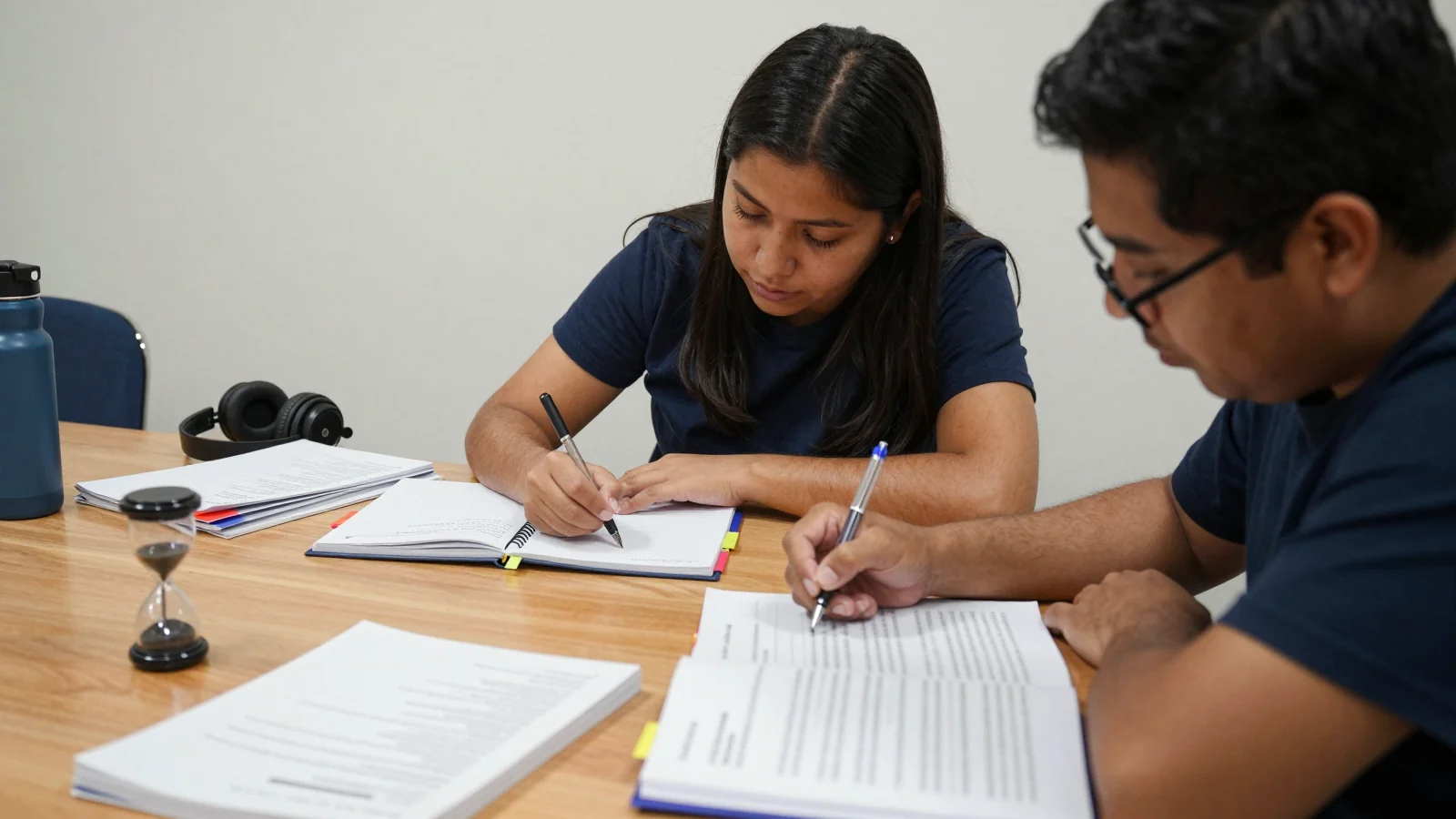
Show the learner connecting country-specific goals with the same online course, test, and writing-support workflow.

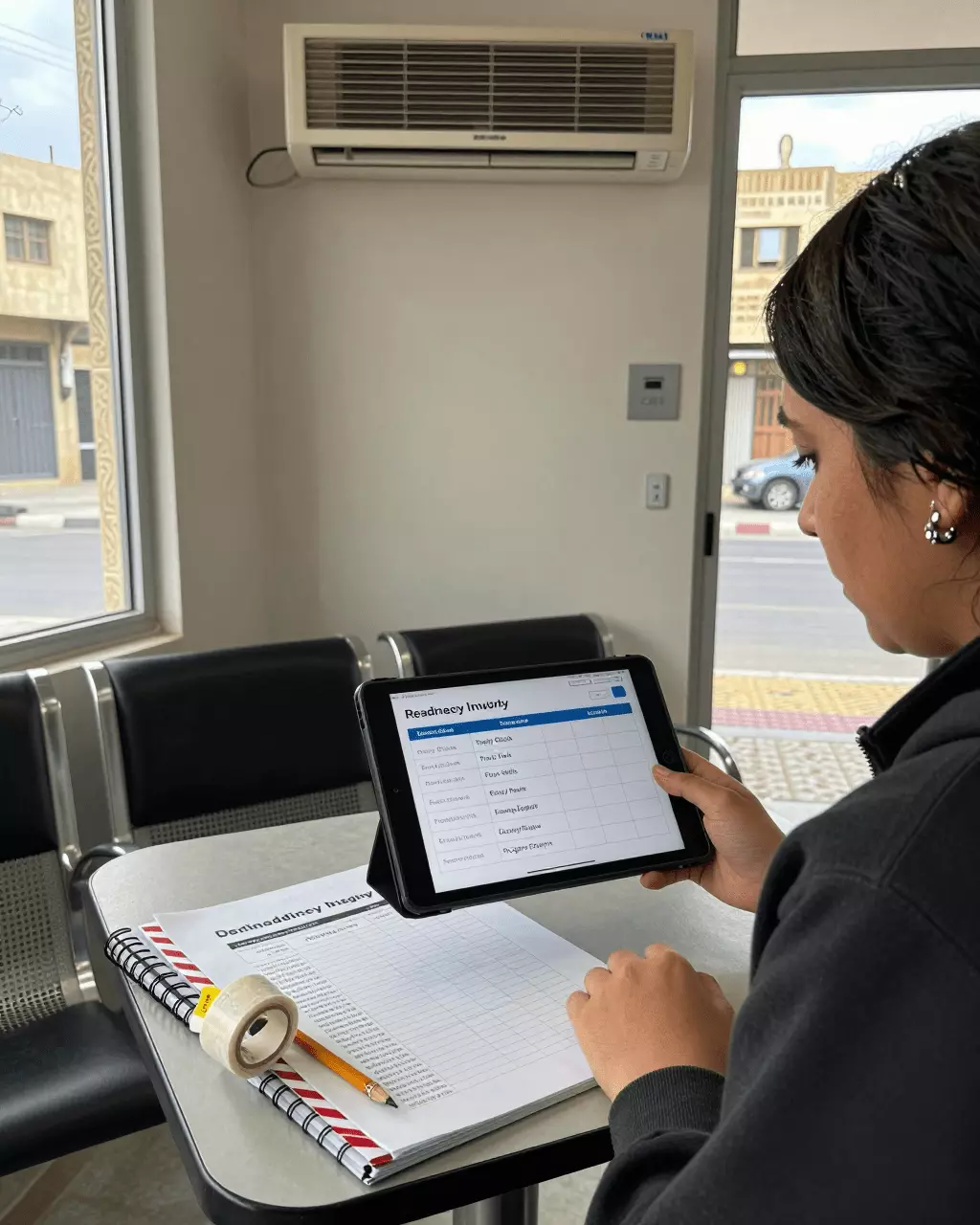
a Filipino woman in her late 20s reviewing an IELTS online course workflow

Your first non-negotiable check: verify official requirements

This is the most important paragraph of this page:

Always verify the exact requirements from the official university, employer, licensing body, immigration office, or pathway office before finalizing your test strategy.

Universities differ by faculty, year, and intake. – Employers and licensing boards can require different score levels or section minima. – Immigration offices can change validity, required bands, and accepted modules. – Some countries and programs may demand Academic, while others accept or prefer General Training.

If you do not confirm these requirements first, you can spend weeks preparing a format you do not need. That is recoverable, but it is avoidable.

Accepted module (Academic or General Training) – Minimum overall band – Minimum section band (if any) – Accepted validity window – Whether the test needs to be repeated near the application date – Whether institutions require one score only or allow alternatives

Once this baseline is confirmed, the remainder of your prep plan becomes much easier to execute.

You can find a concise version of this requirement logic on the homepage, then return here for the Filipino learner path and local schedule considerations.

Academic or General Training: the question Filipino candidates answer first

The exam version choice is not about which is “easier.” It is about which is relevant to your path.

Academic is usually more relevant for learners targeting:

university admission, – postgraduate study, – research or academic communication-heavy pathways, – professions where formal report-style language and high-structure writing tasks are explicitly relevant.

If you are pursuing this route, start by understanding Academic-style writing and reading demands, then align your full roadmap to them.

When General Training is usually the better fit

General Training is usually more relevant for:

migration pathways, – broad workplace communication, – practical study, work, and residency pathways where the test is used as general language proof, – learners who need to prioritize clear everyday-professional communication under time pressure.

That does not automatically eliminate Academic, because program rules can override general expectations. The right rule is always the officially published requirement.

Where free classes fit in a Filipino study plan

If you are cautious about commitment, start in free materials. That is not a downgrade. It is smart sequencing.

An effective free class entry should help you identify:

your current baseline across sections, – your biggest error patterns, – and your realistic weekly learning capacity.

What a practical free class should include

For Filipino students and professionals, free classes should not be just one inspirational video. They should include a structured entry path:

clear overview of IELTS format and section timing, – a baseline activity for Listening and Reading, – a short Writing exercise with practical response criteria, – one concise section on study sequencing (what to do week by week), – and a clear path to the next step.

After a small but useful free sequence, learners can answer whether they are ready for a paid level and which one.

Common free-class decisions you can make immediately

If your understanding is clear and your schedule is stable, move into a paid IELTS online course. – If you are unsure about test version, use the free stage to confirm direction and then move to the relevant test-version page: – IELTS Academic preparation course or – IELTS General Training course. – If writing is your immediate block, keep the free classes short and go into the IELTS writing course flow when your baseline is clear.

Why this is online-first for Filipinos, not classroom-first

The practical reason is simple: schedules are dynamic. If you are taking classes or work shifts, commuting and live-class attendance can become a constraint, not a routine.

An online-first model is usually better for Filipino learners because it is:

low-friction: start immediately and keep going from home, – adjustable: shorter sessions can be split across commute windows, – repeatable: you can revisit the same lesson if your understanding was not clear, – compatible with multiple devices and internet conditions, – and supports a plan that survives work spikes, family duties, and exam-date shifts.

That does not mean motivation disappears; it means your study system is designed around real life, not perfect life.

Course pathways and paid tiers with one-year access

Most learners in this audience compare two realities:

one-time study bursts, and – staged preparation with repeat cycles.

For IELTS prep that must support real life, a one-year access structure is usually safer than short, narrow access windows.

Typical one-year access structures to compare

Depending on platform design and your need, paid options may be split into tiers with shared one-year access:

Self-paced starter tier – access to core structured modules, – useful for goal clarity and baseline completion, – good if your target is to build direction first.

Extended self-paced tier – same foundation plus more section depth, – stronger progression for writing and reading repair, – better for those with mixed weekly schedules.

Priority preparation tier (still self-paced, one-year) – designed for learners with clear deadlines, – often includes richer support hooks, checkpoints, and planning tools, – useful for users moving toward migration/admission cycles.

Choose the tier based on three hard variables:

Is your target date fixed within 6 to 9 months? – Are your weekly study hours stable or irregular? – Do you need more structure around writing and section-level correction?

The answer may be “starter” for some and “extended” for others. Both can be useful if they include enough access continuity and a clear progression map.

Remember: one-year access only helps if you use it to build a cycle, not if you postpone everything and return only at the end.

What to expect in a full online preparation sequence

A robust sequence usually has four tracks, whether you are a student, nurse, caregiver, engineer, office worker, or career switcher.

Track 1: Structured onboarding and baseline

The first 1-2 weeks should reduce uncertainty. You map where your time and errors are going.

section-by-section baseline tasks, – realistic time-boxed sessions, – a baseline writing draft and review checklist, – and a first plan for weekly hours.

Goal of this phase: move from vague “I need to study” to concrete “I need to improve section X with method Y.”

Track 2: Skill blocks (Reading, Listening, Writing, Speaking section)

The second phase builds repeated practice habits per section.

Reading: passage type recognition, question-type patterns, and time discipline. – Listening: focus on instruction parsing, section rhythm, and detail tracking. – Writing: task logic, paragraph control, register accuracy, and revision discipline. – Speaking section: response organization and tempo under predictable timing.

Goal: build stable execution under timing.

Track 3: Error repair and writing support integration

Every learner tends to repeat the same errors until they are named and reviewed. In this stage you convert mistakes into plans.

identify recurring grammar and lexical issues, – reduce instruction misses, – create rewrite routines in Writing, – re-run targeted practice only on persistent errors, – reinforce short answer precision and paragraph cohesion.

If writing remains a bottleneck, move into the dedicated IELTS writing course for focused reinforcement and a section-specific cadence.

Track 4: Exam simulation and final readiness

The final phase prepares you for date pressure.

full-section timing practice, – focused checkpoints after each timed run, – correction by error category, – recovery routines for weak sections, – final week taper and stability checks.

This is not only for score-chasing; it is for reliability under real test conditions.

Busy schedules, realistic plans: choose a schedule that fits your life

The common mistake among Filipino professionals is trying to copy plans built for full-time students with stable blocks. Most realistic schedules are messy.

Option A: 3-5 hours per week (entry plan)

Use this if your weekly load is high due to work shifts, caregiving, or study.

2 sessions x 50 minutes for section blocks (Reading + Listening) – 1 session x 60 minutes for Writing – 1 session for short Speaking section planning and recap – 1 short recovery session for error review

With this schedule, your rule is consistency of one session per day where possible, not volume.

Option B: 6-8 hours per week (steady plan)

Use this if you can set two main study windows.

2 sessions per week focused on Listening + Reading, – 2 sessions on Writing with revision, – 1 section integration session, – 1 writing review or test-response session, – 1 short correction block.

This is the most common sweet spot for professionals preparing over 8-12 weeks.

Option C: 9-12 hours per week (targeted acceleration)

Use this if you are close to an intake date.

3 short section sessions, – 2 intensive Writing review sessions, – 2 timed practice sessions, – 1 test-condition full or partial simulation, – 1 error taxonomy and recovery session.

Acceleration only works with recovery built in. Add a lighter day each week to reduce burnout and protect memory retention.

Option D: Irregular week template (shift workers)

For people on rotating shifts, use a “minimum viable rhythm.”

one 35-minute section review, – one 45-minute Writing block, – one 40-minute Speaking section planning block.

The remaining hour is only for catch-up practice, not a fixed add-on. This keeps momentum without creating guilt cycles.

Writing support: where your score can become more reliable

For many Filipino learners, the Writing section is the most unpredictable section because effort and score do not always rise together.

Writing support does not mean random tips. It means a repeatable workflow:

Build a clean response structure every time. 2. Write once, then mark task alignment. 3. Review recurrent errors by type. 4. Rewrite one or two high-value points. 5. Repeat with new prompts under tighter time.

If your writing errors are mostly about task interpretation or structure, join the deeper writing path at IELTS writing course. If your weakness is speed and precision across all sections, continue through the full online sequence and revisit writing support checkpoints at fixed intervals.

Avoid waiting until week 8 to “fix writing.” Most learners underestimate how quickly structural issues compound. Fixing writing habits early gives you a better return across all mock attempts.

Prep sequence

From country goal to IELTS routine

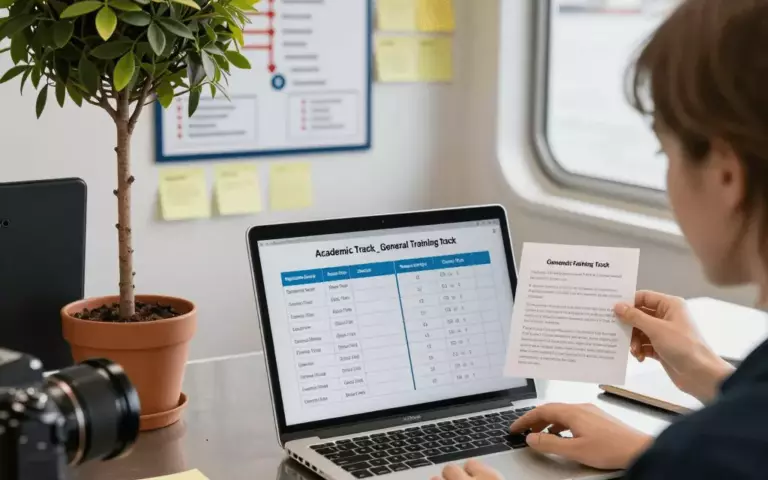
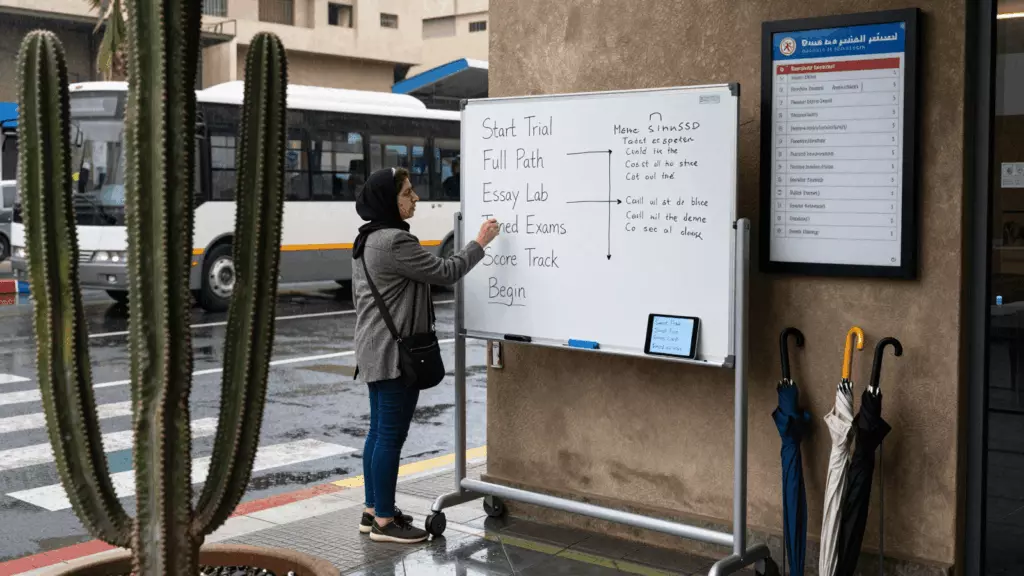
The sequence should feel specific to the learner's study-abroad or migration path without relying on flags or stereotypes.

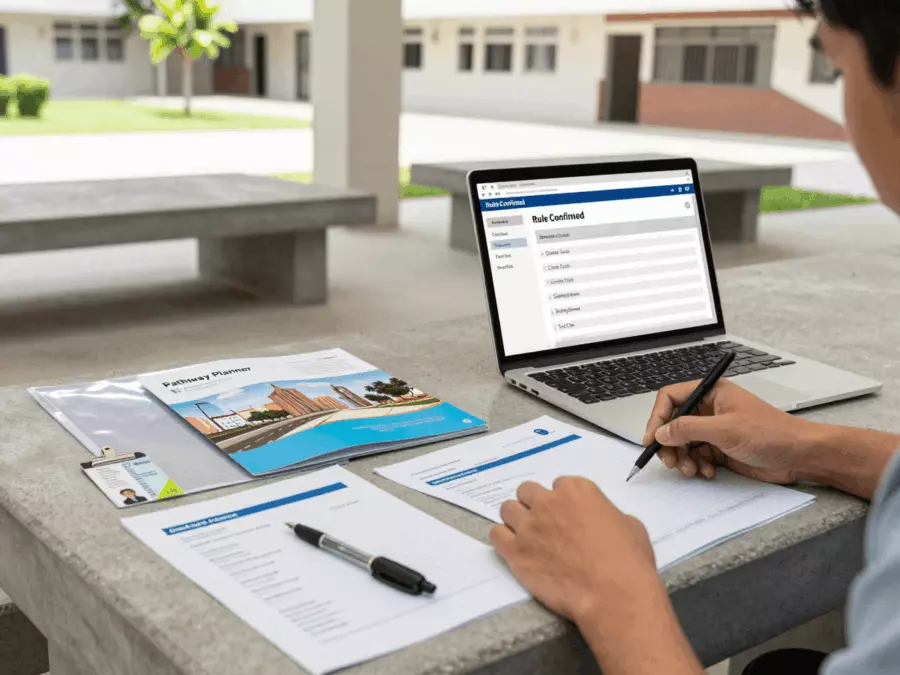
a Filipino woman in her late 20s working through Requirement
Step 1Requirement

Check the IELTS requirement for the destination.

Practice tests: how to use them, and how not to use them

Practice tests are essential, but only if used as feedback loops.

confirm section bottlenecks, – identify recurring errors, – test timing behavior, – check whether your study focus for the week was correct.

Use IELTS practice tests as decision points, not score trophies.

taking one test and declaring readiness or failure, – chasing the highest score from a single attempt, – ignoring where the score dropped and only repeating broad prep.

The better question is not “How high did I score today?” but “Did the same error type reduce after targeted review?”

Week 1: complete a focused practice block and label the top three issue areas.

Week 2: run focused study on those three areas, then review again.

This is the kind of loop that keeps improvement measurable and less random for learners with tight schedules.

Study path by specific Filipino learner profile

Different goals need different starting points. The same is true for Filipino students and professionals.

Profile 1: Students applying for university or study abroad

This group usually needs clarity around Academic requirements early.

Confirm Academic-related institutional requirements. 2. Start with the free section and identify baseline section needs. 3. Move to IELTS Academic preparation course. 4. Set a writing and reading correction cycle from week one.

Practical tip: for academic-focused users, writing Task 1 style and reading precision are often where scores flatten first, so do not leave writing corrections for the end.

Profile 2: Filipino nurses, caregivers, and healthcare professionals

This profile often has demanding shifts and fragmented study windows.

choose a flexible self-paced route, – use short sessions focused on weak sections, – use a weekly minimum viable plan, – use writing support early to improve section clarity, – use practice-test diagnostics to protect exam-day timing.

If your schedule is unstable but your goal is clear, start with IELTS online course for a structure that does not depend on fixed class times.

Profile 3: Professionals targeting work permits, migration, and immigration pathways

This group often begins with mixed uncertainty and deadline pressure.

verify current immigration or employer criteria immediately, – pick module by official requirement first (typically General Training, but still verify), – then choose a sequence that prioritizes section balance and consistency.

After verification, route into IELTS General Training course if that is the requirement, then use the online sequence for execution.

Profile 4: Students returning for score recovery

This profile usually has baseline knowledge but unstable execution.

run a clear baseline on all sections, – reduce study breadth, increase repetition depth, – focus on recurring errors and section rhythm, – use writing support and practice tests as periodic checkpoints.

Recovery is less about trying everything and more about fixing one weakness at a time.

How to choose between self-paced and live-style preferences without live classes

Because this page is built for online preparation, it does not assume in-person classes. If you work best with external prompts, you can still make structured progress by building predictable cues into your self-paced routine:

fixed start and stop time, – short pre-session goals, – immediate error review, – weekend recap and adjustment.

A lot of learners think “no in-person classes” means “no support.” That is not the case when the plan is structured and your checkpoints are consistent.

The Filipino learner starter path: practical sequence

To keep this useful, here is a practical sequence many learners can start with today:

Take a short orientation from the free sequence. – Confirm your module choice using official requirements. – Build a realistic weekly plan with 4 to 8 study slots. – Start with one section baseline and one writing baseline.

add two section modules in a repeating cycle, – review errors after each session, – use one written correction routine.

identify top two recurring error clusters, – reduce non-impactful study breadth, – increase targeted section blocks.

begin tighter time simulations, – use IELTS practice tests as checkpoints, – adjust weekly priorities based on logged errors.

Weeks 11-12: Final stability and repeat plan

focus on consistency, – stabilize execution under time, – preserve your one-year timeline by avoiding last-minute over-revisions.

If you are preparing longer than 12 weeks, replicate the same framework and add one more correction round before each official test window.

Common mistakes Filipino learners make online

Starting from the wrong test version assumption

This is the top cause of wasted cycles. Confirm your requirement source first.

Treating free classes as the full plan

Free classes are an entry point. If you never move to structured loops, your preparation remains partial.

Studying all sections equally for too long

Most learners have one real bottleneck. A balanced schedule is useful only when you first identify the bottleneck.

If you have rotating duties, trying to copy a fixed 2-hour daily model may fail. Use modular timing instead.

Changing method after every small score change

Method stability matters. Improve by adjusting only one or two variables per cycle, not by replacing your system each week.

Writing often looks “okay” but breaks down on structure, task match, and precision. Build revision routines early.

Late testing hides issues until test week. Start earlier and use tests as a navigation tool, not an emergency measure.

A realistic timeline by readiness level

There is no single timeline for everyone, but these examples help planning.

Use this only if your target and score baseline are already visible.

Week 1-2: baseline, module confirmation, writing start. – Week 3-4: section blocks with targeted correction. – Week 5-6: full simulation and final adjustments.

This is the most practical for working adults and students.

Week 1: onboarding and baseline. – Week 2-4: section foundations and daily consistency. – Week 5-8: correction blocks and writing support integration. – Week 9-12: full test simulation cycles and stability checks.

Use this if your schedule requires major resets.

1-4 weeks: module foundation and stable cadence. – 5-8 weeks: targeted correction and revision loops. – 9-12 weeks: simulation and reliability building. – 13+ weeks: second precision cycle and pre-test optimization.

How busy learners can keep momentum over several months

Sustainability is not about willpower. It is about system design.

Daily quick log: what was done and where time went, – Weekly error list: top two mistakes, – Two-week checkpoint: what improved and what remains.

If any of these loops is missing, momentum becomes a guess. This is why a self-paced model only works with measurable checkpoints.

For Filipino learners with family responsibilities, this rhythm is often more realistic than perfect adherence to a long weekly plan.

What to do with the free-to-paid transition

When your free entry is done, transition by objective, not emotion.

Move to paid if you can already state your top two weak sections. – Move to paid if you need structured sequencing and section balancing. – Move to paid if you need one-year continuity for retake windows.

basic self-paced access, – a deeper writing-focused pathway, – or a tier with full progression depth.

That is a practical reason to start with IELTS online course, then branch into the most relevant module page.

What not to do when planning for deadlines

Do not ignore official updates until after you finish studying. 2. Do not compare yourself only with others’ scores. 3. Do not remove writing revision because it feels time-heavy. 4. Do not treat one test-day spike as a full trend. 5. Do not skip check-ins because of temporary overload.

each week ends with one focused correction decision.

Section-by-section note for Philippine learners

Many Filipino learners are strong in language exposure but lose points through timing and instruction mismatch. Train with short, repeated section-focused cycles and always map error types after each attempt.

Reading gains often come from better question navigation before deeper vocabulary expansion. Track where you lose precision: matching, inference, headings, or detail confusion.

Writing often requires the most disciplined revision design. If you can generate ideas but lose marks for structure or task response, use a dedicated writing workflow.

Treat this as part of the total exam routine: clear response structure, concise organization, and tempo control.

Question path before you choose your route

Which IELTS version is right for Filipino students aiming for education?

Most education pathways expect Academic, but your university or program may specify exact criteria. Verify with the institution first, then align your route to either this Academic preparation course or a different track if required.

Do I need free classes first if I am already sure about IELTS?

If your schedule is uncertain, starting with free classes is usually safer. They show the structure and prevent a wrong format choice.

Can this be done alongside work shifts and family responsibilities?

Yes, if you use modular micro-schedules and avoid one-size-fits-all daily timing. Many Filipino professionals use split sessions with planned minimums.

Is paid access worth it if I already used free IELTS materials?

Paid access is usually useful when you need a full sequencing framework, repeated checkpoints, and one-year continuity.

Which page should I open after free classes?

If your target includes study abroad, open IELTS Academic preparation course. If your pathway is work or migration, check IELTS General Training course. If your plan is still broad and module-agnostic, begin with IELTS online course to set structure.

Use them in planned cycles, not randomly. A two-week review cycle is usually more effective than weekly score collecting with no changes.

What if writing is my weakest section and I only have little time?

Use short writing support blocks focused on task structure first, then rotate review into your regular study plan. The dedicated IELTS writing course is a strong match for concentrated improvement.

Next step: a clear path from this page

If you are still deciding your module and need confidence before paying, begin with free IELTS classes.

If your module is clear and your timeline is active, move into IELTS online course for a complete sequence with section balancing and study cadence.

If you already know your route, go directly to:

IELTS Academic preparation course for study-related goals, – IELTS General Training course for work/migration goals, – IELTS writing course if writing is currently your largest blocker, – IELTS practice tests once your plan has been running for several weeks.

No in-person class requirement is needed to use this sequence. If your routine is realistic and your requirements are verified, online prep can be the lower-friction way to reach a stronger score.

Next step

Start free, then choose the next level

Connect the country-specific goal to a self-paced IELTS path, then use practice and writing support to keep progress measurable.

View online course

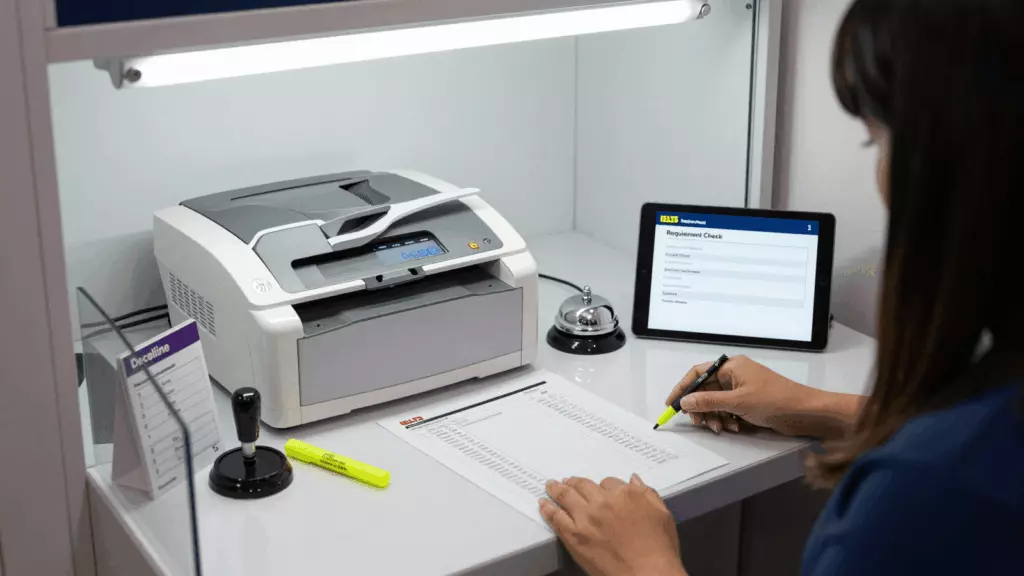
a Filipino woman in her late 20s choosing the next IELTS prep step online